




Shopping for bathroom cabinets in Atlanta GA seems simple until you're actually standing in a showroom surrounded by options that look different and carry very different price tags. Shaker or flat panel? RTA or semi-custom? Plywood box or MDF? Single or double sink vanity?
The good news is that once you understand what separates the cabinet types, materials, and construction quality, the decision gets a lot clearer. This guide covers everything Atlanta homeowners need to know to choose bathroom cabinets confidently, from the different cabinet categories to what holds up in Georgia's climate to what to bring when you visit a showroom.
If you're at the point where you're comparing real options and thinking about pricing, this guide is written for you.
The Different Types of Bathroom Cabinets Atlanta Homeowners Use
Not all bathroom cabinets serve the same purpose. The term covers several distinct products, and most bathrooms need more than one type to handle storage properly.
Vanity cabinets
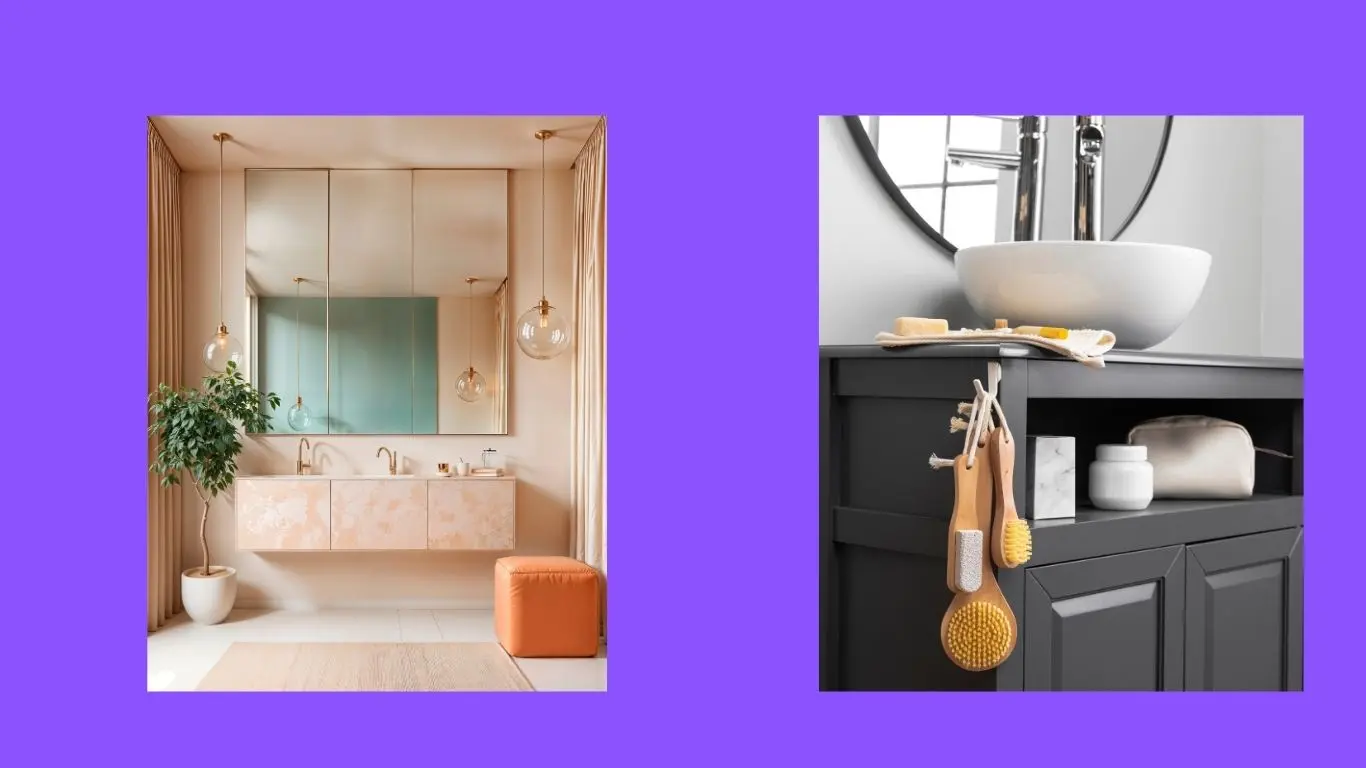
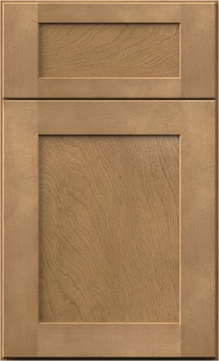
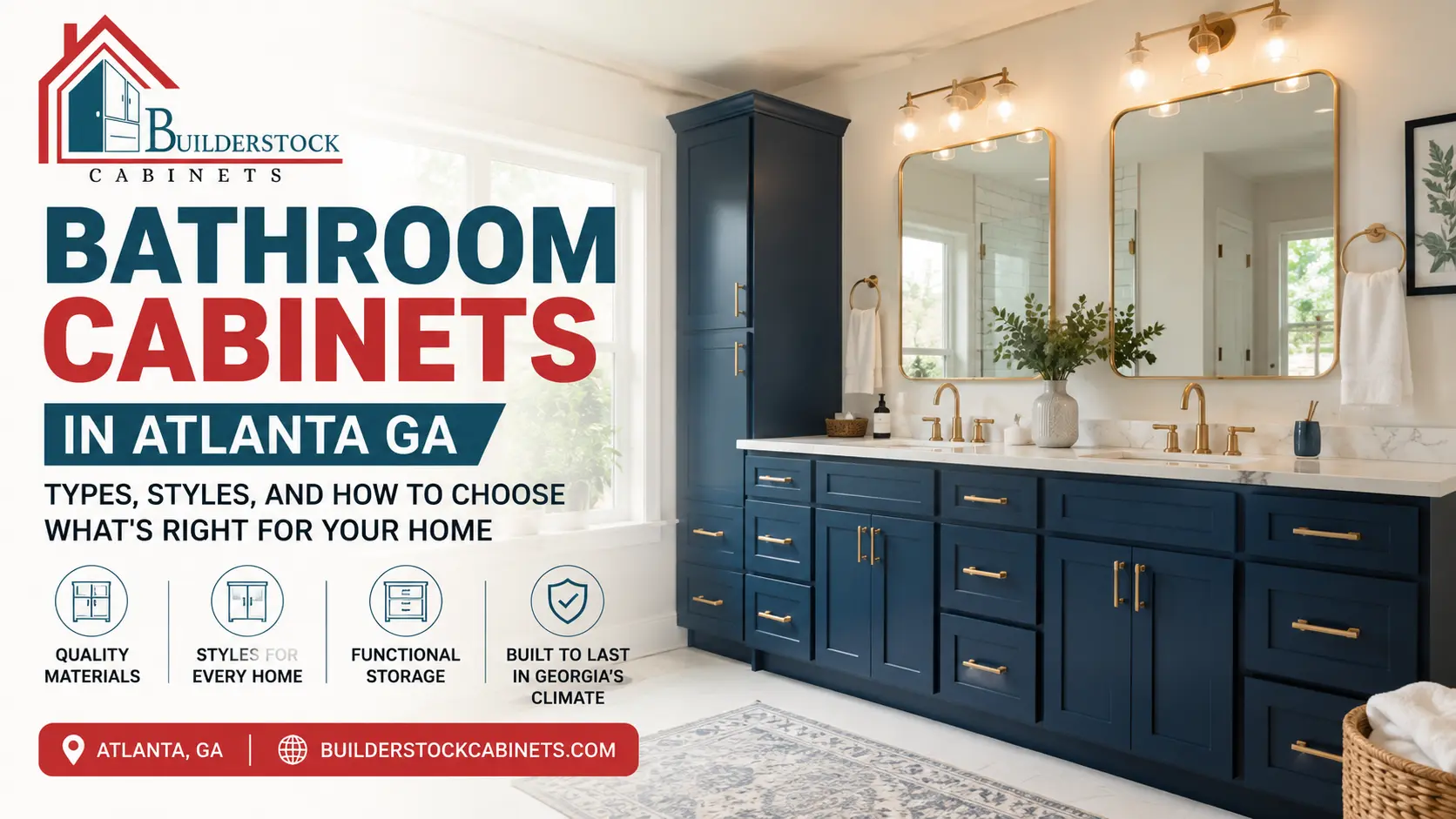
The vanity cabinet is the main base unit that holds the sink and countertop. It anchors the overall look of the space and carries the most storage weight. Vanity cabinets come in widths from 24 inches to 72 inches, with single-sink configurations starting at 24 to 36 inches and double-sink options starting around 48 inches.
The cabinet body contains drawers, doors, or a combination of both. Drawers are generally more functional for everyday toiletries and small items. Door-access base cabinets work better for cleaning supplies or items you don't reach for daily. Most Atlanta homeowners find that a mix of both works best.
Browse the bathroom vanity cabinet collection at Builder Stock Cabinets to see the full range of sizes and configurations available.
Medicine cabinets
Medicine cabinets mount on the wall or recessed into it, usually above or to the side of the vanity. They add usable storage without taking up any floor space, which matters in Atlanta bathrooms that run smaller. Recessed models cut between wall studs and have a cleaner look but require cutting into drywall. Surface-mount models install faster and don't involve any wall work.
Wall cabinets
Upper cabinets mounted on the wall, similar in concept to kitchen wall cabinets but sized for bathroom use. They're a practical solution in larger bathrooms where the vanity alone doesn't handle all the storage needs. Common in primary baths in Alpharetta, Roswell, and Johns Creek new construction where the bathroom footprint is large enough to support additional cabinetry above the counter line.
Linen cabinets and towers
Freestanding or built-in linen towers provide tall vertical storage for towels, toiletries, and cleaning supplies. They work well beside a vanity or in a separate area of a larger bathroom. In older Atlanta bungalows where the bathroom itself is compact, a linen tower in an adjacent hallway area is often the right call.
Cabinet Materials: What Holds Up in Atlanta's Climate
Georgia's humidity is a real factor in cabinet longevity, and Atlanta homeowners who overlook it often regret it within a few years. Atlanta sees hot, humid summers and mild but damp winters. Cabinets that handle moisture poorly show problems within 3 to 5 years: swollen drawer boxes, warping door frames, and surfaces that delaminate at the edges.
Plywood cabinet boxes
Plywood is the better material for bathroom cabinet boxes in Atlanta. It holds screws better than particleboard, doesn't swell and contract with humidity at the same rate, and holds up to the occasional moisture exposure under the sink or around the drain. Most mid-range and above bathroom vanity cabinets use plywood box construction. When comparing options, ask specifically about the box material, not just the door material. This is the single most important material question you can ask.
MDF (medium-density fiberboard)
MDF is common for door and drawer fronts because it takes paint consistently and doesn't show wood grain variation. It's not ideal for cabinet boxes in humid environments, but as a door material with a proper sealed finish, it holds up reasonably well in Atlanta bathrooms with adequate ventilation.
Solid wood
Solid wood doors and frames are durable and maintain their look for many years when properly finished. They cost more than MDF alternatives. Species matter for performance: oak, maple, and birch handle humidity better than softer woods. Most quality bathroom vanities use solid wood frames with plywood panel construction.
Thermofoil and laminate
These are lower-cost finishes applied over an MDF substrate. They're consistent in color and easy to clean, which is why they show up frequently in rental properties and budget renovations across Atlanta. The downside is that the film can peel at edges when exposed to steam regularly. In Atlanta bathrooms without proper ventilation, or where a shower is in the same small room, thermofoil can start separating from the substrate within a few years.
Stock, RTA, Semi-Custom, and Custom: What's the Real Difference?
This is where most Atlanta homeowners spend the most time comparing. Here's a plain breakdown without the sales pitch.
Stock cabinets
Stock cabinets are pre-built and available for immediate purchase. They come in standard sizes with limited finish and style options. If you need cabinets quickly and your bathroom dimensions work within standard measurements, stock is the most cost-effective starting point. Prices range from roughly $100 to $500 per linear foot depending on quality level.
RTA (ready to assemble) cabinets
RTA cabinets ship flat-packed and are assembled on site. Because they're cheaper to warehouse and ship in flat boxes, they typically cost 30 to 50 percent less than pre-assembled equivalents. Quality varies significantly between RTA brands. Better RTA options use plywood box construction and solid wood doors and are a genuinely good value. Lower-end RTA uses particleboard throughout, and the savings don't hold up in Atlanta's conditions over time.
For budget-conscious renovations, guest bathrooms, or investment properties, quality RTA options from Builder Stock Cabinets' RTA cabinet selection can be an excellent choice when you know what to look for.
For a deeper comparison between RTA and custom options, this Builder Stock Cabinets blog post on RTA vs. custom cabinets covers the tradeoffs in detail.
Semi-custom cabinets
Semi-custom starts from standard sizes but allows modifications: different depths, heights, or widths; additional interior features like pull-out trays or organizers; a wider range of finish and door style options. Lead time runs 4 to 6 weeks. They cost more than stock or RTA, but significantly less than fully custom work, and they solve the problem when a bathroom doesn't fit neatly into standard dimensions.
Custom cabinets
Fully custom cabinets are built from scratch to your exact specifications. Lead times run 8 to 12 weeks, sometimes longer. They make sense for unusual bathroom layouts, high-end primary bath remodels, or when the design needs to match specific architectural features in an older Atlanta home. They're the most expensive option and not the right fit for most bathroom renovation budgets.
For most Atlanta homeowners doing a bathroom update, quality stock or semi-custom cabinets hit the right balance of cost, availability, and result.

Popular Bathroom Cabinet Styles in Atlanta for 2026:
Style preferences in Atlanta bathrooms have shifted meaningfully over the last two to three years. Here's where things stand heading into 2026.
Shaker
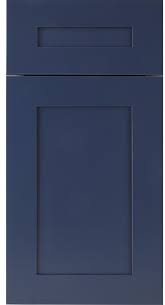
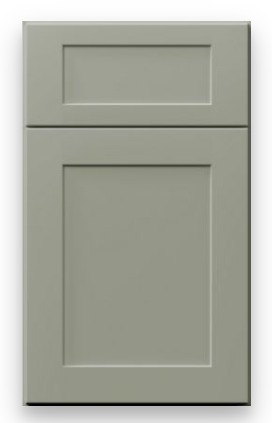
Shaker-style cabinets remain the most popular choice across Atlanta's suburbs, from Marietta to Woodstock to Kennesaw. The clean recessed-panel door works in traditional, transitional, and modern bathrooms without looking out of place. Shaker pairs well with marble, quartz, and natural stone countertops, which are common in Atlanta's mid-range to high-end renovations. If you want a style that photographs well and holds resale appeal, shaker cabinets are hard to argue against.
Flat panel (modern/slab)
Flat-panel cabinet doors with no frame or profile are gaining ground in Atlanta's newer developments and urban spaces. They have a minimal look that pairs well with matte hardware and engineered or concrete-look countertops. If you go in this direction, the finish quality matters more because there's no frame detail to draw the eye away from inconsistencies.
White and warm neutrals
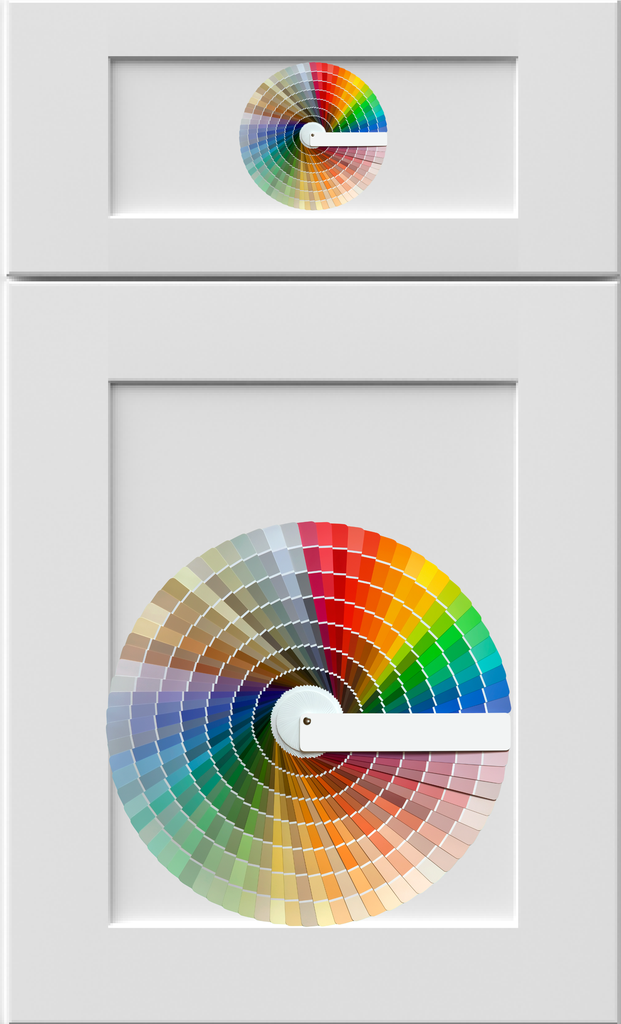
White painted cabinets have held the top spot for years in Atlanta because they show well in natural light and photograph cleanly for resale. In 2026, more Atlanta homeowners are moving toward warm off-whites, light taupes, and soft sage greens. These tones work well with Atlanta's afternoon light, which runs warm, and they feel less clinical than pure white in smaller bathroom spaces.
Natural wood finishes
White oak and light maple finishes are showing up more frequently in Atlanta bathroom remodels. They add warmth and texture without feeling heavy, and they coordinate well with the natural stone and warm metal hardware trends that continue to grow in the Atlanta market. Worth considering for a primary bathroom where a single color palette can feel flat.
How to Measure Your Bathroom Before You Buy
Showing up at a cabinet showroom without measurements is one of the most common reasons Atlanta homeowners end up making costly mistakes. Here's what to measure and bring.
Width: Measure from wall to wall in the vanity area. Note where the toilet sits, where the door swings open, and whether any door clearance conflicts with a wider vanity.
Height: Standard vanity height (including the countertop) is 34 to 36 inches. If existing plumbing heights are fixed, confirm a new vanity will clear them properly.
Depth: Standard vanity depth is 21 inches from the wall. Check whether any door swing, toilet clearance, or traffic path limits available depth.
Plumbing location: Measure where the drain pipe exits the wall or floor, from the pipe centerline to the nearest side wall. This tells you whether a given vanity's internal drain cutout will line up with your existing plumbing. Getting this wrong requires a plumber to relocate the drain, which adds cost.
Bring photos of the existing bathroom, including any tile, lighting, or fixtures you plan to keep. This gives the cabinet specialist the full context to make useful recommendations rather than just showing you everything in the showroom.
The NKBA (National Kitchen and Bath Association) publishes clearance standards for bathroom layouts that local Atlanta contractors and designers use as a reference for planning bathroom renovations.
What to Look for at a Cabinet Showroom in Atlanta
Visiting a showroom gives you something no website can: the ability to open doors, check drawer slides, and see how finish colors look under real light conditions. This matters in Atlanta bathrooms where natural lighting varies between morning sun and late afternoon warmth.
Here's what to check when you're in person:
Drawer box construction: Pull out a drawer and look at the sides. Dovetail joinery and plywood sides are signs of better quality construction. Stapled corners and particleboard sides are signs of lower quality.
Drawer slides: Open and close a few drawers. Soft-close slides should move smoothly and close quietly. Slides that feel loose, catch, or slam indicate lower-quality hardware that will wear out quickly.
Door hinges: Open and close cabinet doors several times. Quality hinges have minimal wobble and allow doors to close flush and straight. Check that doors hang level and that there's no gap or misalignment.
Finish quality: Look closely at corners and edges, where paint or finish tends to thin out or chip first. Quality finishing coats cover edges as consistently as face surfaces.
Ask the showroom team directly: "What is the cabinet box made of?" A plywood box is worth a higher price point in Atlanta's climate. An honest answer to that question tells you a lot about a company's product knowledge.
Find the Right Bathroom Cabinets at Builder Stock Cabinets in Atlanta
If you're shopping for bathroom cabinets in Atlanta GA and want to see real options in person before making a decision, Builder Stock Cabinets is a good next step. Their Atlanta showroom carries a wide selection of vanity cabinets, RTA options, and semi-custom collections in styles that work across Atlanta's range of home types, from classic craftsman bungalows in Decatur to contemporary builds in Alpharetta and Woodstock.
The team can help you work through measurements, material choices, and style decisions. If you're also considering kitchen cabinets as part of a larger home renovation, they carry full kitchen lines that can be coordinated with bathroom selections for a consistent look throughout the home.
Browse the bathroom cabinet collection online to start narrowing your options, or stop by the showroom to see finish quality and construction in person. For custom quotes or project planning help, reach out directly to speak with a cabinet specialist who knows Atlanta bathrooms.
FAQs:
What size bathroom vanity cabinet should I get for my Atlanta home?
It depends on the bathroom footprint and how many people use the space. Bathrooms under 60 square feet work well with 24 to 36-inch single vanities. Shared or primary bathrooms with enough wall space benefit from 48 to 72-inch double configurations. Always measure the available width, depth, and clearances before shopping.
Are RTA bathroom cabinets worth buying in Atlanta?
Yes, for the right project. Quality RTA bathroom cabinets with plywood box construction and solid wood doors offer strong value, especially for guest baths, rental properties, or budget-focused renovations. The key is knowing how to compare quality, since RTA covers a wide range from genuinely good to poor construction.
How long do bathroom cabinets last in Atlanta?
Quality bathroom cabinets installed in a properly ventilated bathroom last 20 to 30 years in Atlanta. Lower-quality particleboard construction in humid conditions can show significant wear within 5 to 10 years. Plywood construction, moisture-resistant finishes, and a properly installed exhaust fan vented to the outside (not the attic) extend cabinet life considerably.
What is the best bathroom cabinet color for Atlanta homes in 2026?
White and off-white remain the safest choices for resale value across Atlanta's market. Warm neutrals and soft sage greens are growing in higher-end primary bath remodels. If you plan to sell within five years, neutral tones give you broader buyer appeal. If this is your long-term home, choose a color that you actually like living with daily.
Can I match new bathroom cabinets to existing kitchen cabinets in my Atlanta home?
Yes, if you're using the same manufacturer and finish line. Cabinet manufacturers keep production batches consistent within a product line. If you're mixing brands, always request door samples and compare them side by side before committing to a purchase. Painted finishes are easier to match than stained wood tones.