





Meta Description: Shopping for bathroom vanities in Atlanta? This guide covers sizes, styles, materials, and what Atlanta homeowners need to know before buying so you get the right vanity the first time. Browse Builder Stock Cabinets vanities to get started.
Table of Contents
- Why the Right Vanity Makes a Bigger Difference Than You Think
- Getting the Size Right Before You Buy
- Vanity Styles That Work in Atlanta Bathrooms
- What Separates a Good Vanity From a Budget Disappointment
- Thinking About Storage Before You Commit
- Countertop and Sink Options for Atlanta Bathrooms
- Single vs Double Sink Vanities: How to Decide
- What Bathroom Vanities Cost in Atlanta
- What to Know Before Installation
- Where to Buy Bathroom Vanities in Atlanta
- FAQs: Bathroom Vanities in Atlanta
- Conclusion
Most Atlanta homeowners spend more time picking bathroom vanities than they expect to. What seems like a straightforward purchase turns into a series of questions: How much clearance do I need? What finish holds up in a humid bathroom? Is that cabinet box solid wood or particle board? Does the countertop come with the vanity or is that sold separately?
These aren't complicated questions, but they matter a lot. A bathroom vanity that looks good in a product photo but arrives the wrong size, uses cheap materials that swell and warp in bathroom humidity, or lacks the storage you actually need can cost you more to correct than it cost to buy.
This guide is written for homeowners in the middle of that decision. Not for people just starting to think about a bathroom update, but for those who are actively comparing options and want clear answers before committing.
Why the Right Vanity Makes a Bigger Difference Than You Think
A bathroom vanity is the most used piece of furniture in any bathroom. It gets handled multiple times a day, it manages water exposure daily, and in Atlanta's humid climate, it deals with ongoing moisture that doesn't exist in the same way in drier parts of the country.
Beyond function, the vanity sets the tone for the entire bathroom. Unlike a kitchen, bathrooms typically have few other design elements. There's a vanity, a toilet, a tub or shower, and the tile. The vanity carries more visual weight than any other element in the room, and it's also the element most people interact with up close.
Getting the vanity right means the bathroom works well for years. Getting it wrong usually means living with a cabinet that doesn't close properly, swells near the sink, or simply doesn't fit the way you expected it to.
Getting the Size Right Before You Buy
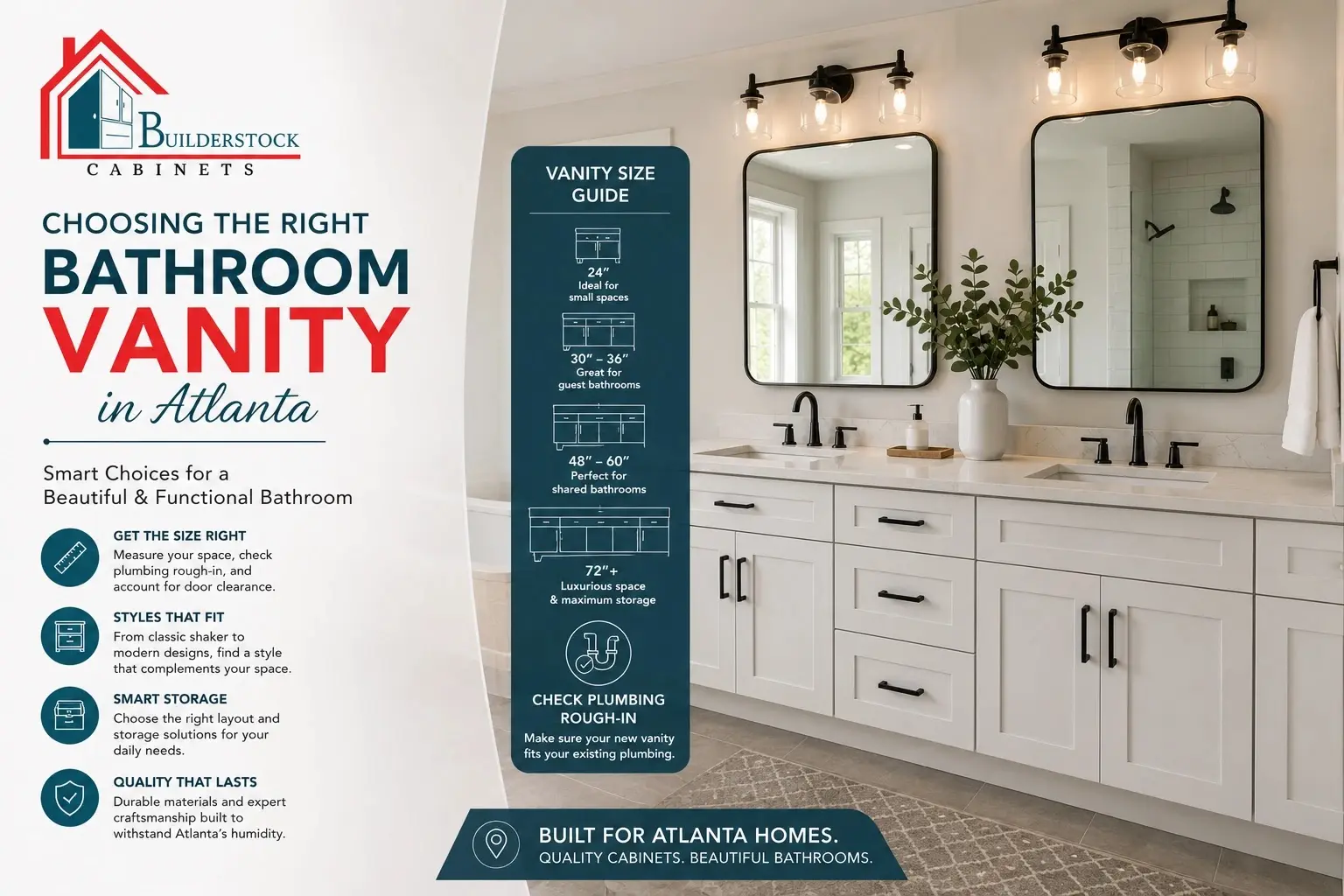
Sizing is where bathroom vanity purchases most often go wrong. Unlike kitchen cabinets where standard sizes and filler panels give you flexibility, bathroom vanities need to fit specific spaces with specific plumbing rough-in locations and door swing clearances that can't be adjusted after the fact.
Width
Vanity widths run from 24 inches on the low end up to 72 inches and beyond for double vanities. Common sizes are 24, 30, 36, 48, 60, and 72 inches. Before selecting a width, measure your available wall space with room to spare. A 60-inch vanity in a space that can only accommodate 58 inches creates a problem you can't solve after delivery.
Depth
Standard vanity depth is 21 to 22 inches. This is sized to work with standard 20 to 21-inch rectangular drop-in or undermount sinks. Some spaces, particularly in older Atlanta homes where bathrooms were not generously sized, may not have enough clearance from the vanity to the door or toilet for a full-depth cabinet. Shallow-depth vanities at 16 to 18 inches are available for tighter spaces.
Height
Traditional vanity height is 32 inches, which was the standard for decades. Comfort height vanities, sometimes called ADA-compliant height, run 34 to 36 inches. Most adults find comfort height easier to use because you're not bending as far to reach the sink. If you're replacing an older vanity, verify whether your existing plumbing rough-in locations will work with a taller cabinet before ordering.
Plumbing Rough-In Location
The drain and supply lines come through the wall or floor at specific locations. Your new vanity needs to accommodate those locations. If you're buying a freestanding or furniture-style vanity, confirm that the cabinet back panel has a cutout or open back that aligns with your plumbing before installation day.
Door Swing Clearance
This is the measurement most homeowners skip. The bathroom door swings into a space that the vanity cannot occupy. Measure from the wall to the door's swing arc at the front of the vanity's planned position. If the door clips the vanity or won't open fully, you'll need to either select a narrower unit or reconsider the layout.
Vanity Styles That Work in Atlanta Bathrooms
Bathroom design in Atlanta spans a wide range, from the traditional colonial-style homes in Marietta and Roswell to the modern condos in Midtown and the craftsman bungalows of Grant Park. Vanity styles that feel right in one bathroom can look completely wrong in another.
Shaker Vanities
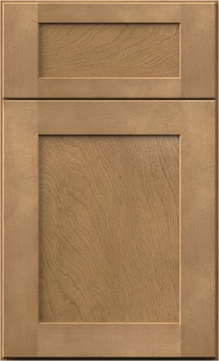
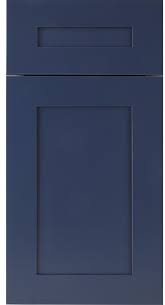
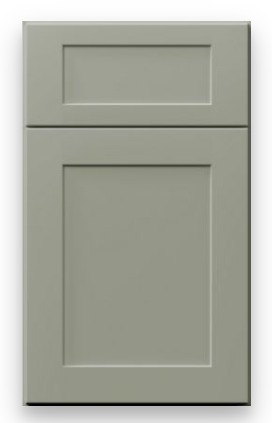
Shaker-style vanities are the most versatile option and the most popular in Atlanta right now. The five-piece door with a recessed center panel reads as clean without being cold. Shaker works in traditional, transitional, and contemporary bathrooms. It pairs well with nearly any countertop material and hardware finish.
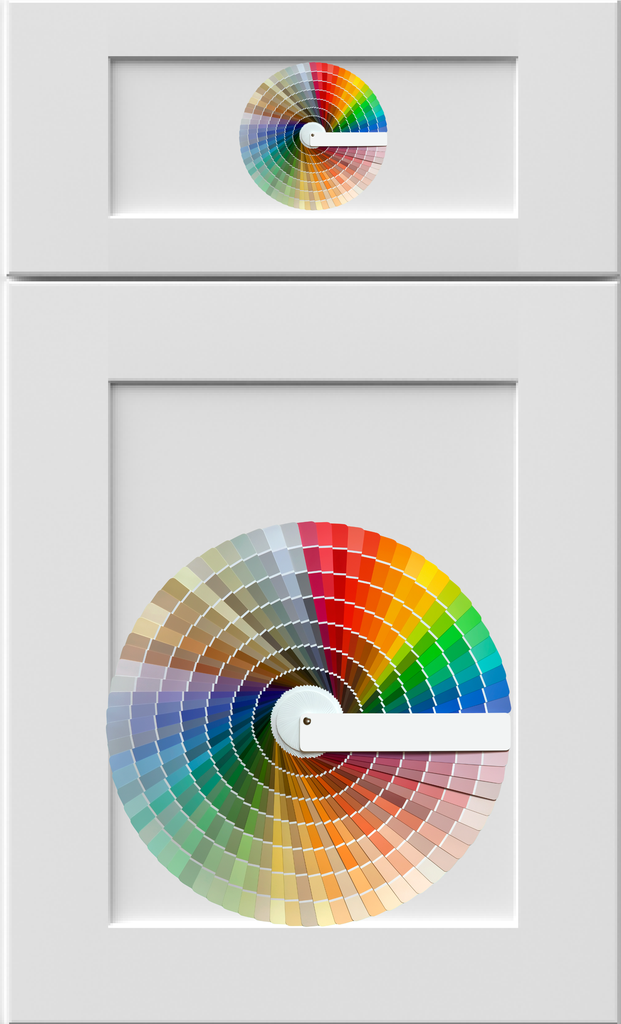
Bathroom vanities in Atlanta in shaker style are available in white, gray, navy, and wood-tone finishes, giving homeowners significant flexibility without committing to a more period-specific style. Browse shaker bathroom vanities to compare finishes.
Raised Panel Vanities
Raised panel vanities suit traditional bathroom styles. If your Atlanta home has formal architectural details, wainscoting, or traditional tile work, a raised panel vanity in white or soft white typically integrates better than a shaker or contemporary style.
Flat Panel or Slab Vanities
Flat panel vanities suit contemporary and modern bathrooms. They work well in newer construction homes in Atlanta's suburbs where the bathroom design is clean and minimal. The maintenance consideration with flat panel doors is the same as with kitchen cabinets: fingerprints and smudges show more readily on a matte flat surface than on a textured door.
Floating (Wall-Mounted) Vanities
Floating vanities are wall-mounted rather than floor-standing. They create the visual impression of more floor space, which makes small bathrooms feel larger. They also make floor cleaning easier. The installation requirement is the trade-off: the wall framing needs to support the weight of the vanity, countertop, and sink, and the plumbing rough-in needs to work with the floating configuration. In older Atlanta homes with plaster walls, floating vanity installation may require more wall work than in newer construction.
Furniture-Style Vanities
Furniture-style vanities are designed to look like freestanding furniture rather than built-in cabinetry. They typically have decorative legs, exposed frames, or open shelving elements. They suit farmhouse, cottage, and transitional bathroom styles and work well in Atlanta's older neighborhoods where a softer, less built-in look fits the home's character.
What Separates a Good Vanity From a Budget Disappointment
Bathrooms are harder on cabinet construction than kitchens in one specific way: the humidity is more sustained and concentrated. A bathroom where someone showers daily generates significant moisture that settles on and around the vanity. Construction quality determines how well the vanity handles that over time.
Box Material
Solid wood and plywood boxes are significantly more moisture-resistant than particle board. Particle board swells when it absorbs moisture, and once it starts to swell, the damage is permanent. If a vanity product listing doesn't specify the box material, or if the listing says "engineered wood" without further detail, that's typically particle board. Ask directly before purchasing.
Quality cabinet construction using plywood boxes extends the life of bathroom vanities significantly, particularly in Atlanta's humid climate where moisture is a consistent factor. Learn about Builder Stock Cabinets' construction standards.
Door and Drawer Finish
The finish on vanity doors needs to handle humidity without peeling, bubbling, or discoloring. Painted finishes on MDF are the most common and work well when the edges are properly sealed. Thermofoil finishes are more economical but vulnerable to heat and long-term humidity exposure at edges and seams. Solid wood doors with a sealed paint or stain finish handle bathroom conditions well but come at a higher cost.
Hinges and Hardware
Soft-close hinges are worth specifying for bathroom vanities. The bathroom cabinet is opened and closed repeatedly throughout the day, often without full attention, and soft-close hardware prevents the slamming that loosens hinges and damages finish at the hinge point over time. Look for full-overlay hinges that provide complete coverage of the cabinet opening when the door is closed.
Drawer Construction
If the vanity has drawers, check the drawer box material and joint construction. Dovetail joints in solid wood or plywood drawer boxes hold up to daily use far better than stapled particle board. The drawer slides should be undermount or full-extension side-mount for full access to drawer contents without lifting items to see what's at the back.
Thinking About Storage Before You Commit
The vanity you're replacing likely didn't have enough storage. This is one of the most consistent complaints homeowners express about their current bathrooms. Before selecting a replacement, take inventory of what you actually need to store.
Under-sink storage is limited in most vanity configurations because the plumbing takes up the center of the cabinet interior. Vanities with offset or angled plumbing cut-outs maximize usable storage. Vanities with side drawers or a three-door configuration (center doors plus side drawers) provide more organized storage than a simple two-door cabinet.
If the vanity's storage capacity is genuinely limited by the space available, consider supplementing with:
- A linen closet in or adjacent to the bathroom
- Wall-mounted storage above the toilet
- A medicine cabinet above the vanity instead of a flat mirror
- Pull-out shelving inside the vanity cabinet
The goal is to have the storage you need before you buy rather than realizing the problem after installation, when changing course is significantly more expensive.
Countertop and Sink Options for Atlanta Bathrooms
Many vanity products are sold as vanity-only units, meaning the countertop and sink are purchased separately. Others come as complete packages with a countertop and sink included. Understanding what's included in any vanity you're considering prevents surprises at checkout.
Integrated (Cultured Marble) Countertops
Many mid-range vanity packages include an integrated cultured marble top with a formed sink bowl. Cultured marble is easy to clean because there's no seam between the countertop and the sink. It's a practical choice for guest bathrooms or secondary bathrooms where the design goals are functional rather than high-end.
Quartz Countertops
Quartz countertops for bathrooms work the same way as kitchen quartz: non-porous, easy to clean, and consistent in appearance. The cost is higher than cultured marble, but quartz holds up better under long-term use and looks more like stone. Most quartz bathroom countertops are sold with an undermount sink already cut and set.
Marble and Natural Stone
Natural marble and other stone countertops add a high-end look to bathroom vanities. The maintenance requirement is higher: natural stone is porous and needs to be sealed periodically to resist staining. For primary bathrooms where the look matters, natural stone can be worth the investment. For guest bathrooms or heavily used family bathrooms, the maintenance consideration weighs against it.
Sink Configuration
Undermount sinks sit below the countertop and are the easiest to clean around. Drop-in sinks have a rim that sits on top of the countertop. Vessel sinks sit on top of the countertop completely and create a distinctive look but require a different faucet height and leave the exterior of the sink more exposed. Vessel sinks can be harder to clean around the base where the sink meets the countertop surface.
Single vs Double Sink Vanities: How to Decide

The decision between a single and double sink vanity comes down to bathroom usage, available space, and realistic assessment of how your household actually uses the bathroom.
Double sink vanities require a minimum of about 60 inches of width to be functional. Below 60 inches, the sinks are too close together to be comfortable side by side. If your bathroom space allows 60 inches or more and two people regularly use the bathroom at the same time during morning routines, a double vanity significantly reduces conflict over access.
For guest bathrooms, powder rooms, and bathrooms used by one person, a single sink vanity with more storage is almost always a better use of space than a double sink configuration. A single sink 36-inch vanity provides significantly more usable under-sink and drawer storage than the same space divided between two sinks.
What Bathroom Vanities Cost in Atlanta
Vanity pricing in Atlanta covers a wide range. These are general categories, not quotes from any specific supplier, and pricing varies based on size, construction, and finish selections.
Entry-Level Vanities
Entry-level vanities in 24 to 36-inch sizes typically run from $200 to $600. Construction at this price point is often particle board with thermofoil or basic painted doors. These work for secondary bathrooms where the vanity will see lower usage and where budget is the primary constraint.
Mid-Range Vanities
Mid-range vanities from $600 to $1,500 offer better construction, more style options, and typically include a countertop and sink in the package. Plywood box construction is more common at this price point, and door quality improves meaningfully.
Premium Vanities
Premium vanities from $1,500 to $4,000 and above offer solid wood construction, stone countertops, quality hardware, and design-forward styles. For primary bathrooms in higher-end Atlanta homes, this investment makes sense given the daily use the vanity will see over 15 to 20 years.
For homeowners working with contractors on a full bathroom renovation, Builder Stock Cabinets carries bathroom vanities in Atlanta across multiple price points and construction quality levels. The team can help you match the right product to your specific bathroom size, usage pattern, and budget.
What to Know Before Installation
A few installation considerations that catch Atlanta homeowners off guard:
Existing Flooring and Walls
If the new vanity is a different size than the one being removed, you'll likely see unfloored or unpainted areas where the old unit sat. Budget for flooring and paint touch-up as part of the project, not as an afterthought.
Plumbing Adjustments
If you're changing vanity height or moving from a pedestal sink to a cabinet vanity (or vice versa), the drain and supply rough-ins may need adjustment. Factor a plumber into the installation budget if there's any question about plumbing compatibility.
Wall Blocking for Floating Vanities
Floating vanity installation in older Atlanta homes often requires opening the wall to add blocking between studs. This is drywall work that adds to the installation timeline and cost. Confirm wall construction before committing to a floating design.
Mirror and Lighting
If the new vanity is wider or narrower than the previous one, the existing mirror and light fixture may no longer be centered above it. Plan for those adjustments as part of the project scope from the beginning.
The National Kitchen and Bath Association (NKBA) provides bathroom design guidelines including clearance standards and layout recommendations that can help you plan the full scope of a bathroom renovation before contractors are involved.
Where to Buy Bathroom Vanities in Atlanta
Atlanta homeowners have several purchasing options for bathroom vanities, each suited to different project types and priorities.
Cabinet and Vanity Showrooms
Specialty showrooms focused on cabinets and vanities let you see door samples, compare finish quality, and work with staff who understand construction differences between products. For a primary bathroom renovation where you want to get the selection right, a showroom visit is worth the time.
Builder Stock Cabinets in Atlanta carries bathroom vanities alongside kitchen cabinets, which is useful if you're renovating both spaces and want consistent construction quality and complementary design across the project. Visit our showroom page to learn more — it's accessible to homeowners, contractors, and property investors working on renovations in Atlanta and the surrounding communities.
Home Improvement Stores
Home Depot and Lowe's carry a selection of bathroom vanities with the advantage of immediate availability for many standard sizes. The trade-off is limited selection, particularly at larger sizes, and the staff are generalists rather than cabinet or vanity specialists.
Online Retailers
A wide range of vanities are available online at competitive pricing. The challenge with buying a vanity online is assessing finish and construction quality from photos. Most reputable online vanity retailers have clear return policies and responsive customer service, but shipping damage and returns are more complicated than with a local purchase. If you're buying online, read reviews specifically about packaging and condition upon delivery.
FAQs: Bathroom Vanities in Atlanta
What size bathroom vanity do I need for a small bathroom?
For a small bathroom with limited wall space, start with the actual available width and subtract enough clearance for the door to open fully and not crowd the toilet or shower. A 24-inch vanity is the smallest practical size for most adults. For very small bathrooms in older Atlanta homes, 18 to 20-inch depth vanities are available and free up floor space without sacrificing too much storage.
Is it better to buy a vanity with a countertop included or purchase them separately?
For guest bathrooms and secondary bathrooms, buying a complete package with a countertop and sink included is typically more cost-effective. For primary bathrooms where you want a specific stone countertop or a particular sink configuration, buying the vanity and top separately gives you more control over the result. Just confirm the countertop dimensions and sink cut-out specifications before ordering separately.
What vanity finish holds up best in Atlanta's humidity?
Painted wood or plywood construction with properly sealed edges holds up well. Thermofoil is acceptable in drier parts of the bathroom but can delaminate over time near high-moisture areas like under the sink if there's any plumbing leak or splash exposure. The most durable finish for a bathroom environment is a catalyzed or conversion varnish applied over solid wood or plywood.
Can I match my bathroom vanity to my kitchen cabinets?
Yes, and many Atlanta homeowners who renovate both spaces at the same time choose matching door styles and finishes for design consistency across the home. A white shaker vanity in the bathroom paired with white shaker kitchen cabinets creates a unified interior aesthetic. Buying both from the same supplier is the most reliable way to ensure the finish and door construction match closely.
How do I know if a vanity is good quality or just looks good in photos?
Ask these four questions: What is the box made from (plywood or particle board)? What is the door finish technology (painted MDF, thermofoil, solid wood)? Are the drawer joints dovetail or stapled? Are the hinges and drawer slides soft-close as standard? If a supplier can answer all four specifically and positively, the product is likely solid. If any of those questions get vague answers, that's your signal to look more carefully.
What's the difference between a bathroom vanity and a bathroom cabinet?
A bathroom vanity is a cabinet specifically designed for under-sink use. It has a countertop cutout or a pre-installed countertop, plumbing access, and is sized to standard bathroom sink dimensions. A bathroom cabinet is a general term that can refer to wall-mounted storage, medicine cabinets, or linen towers that don't include a sink. When you see "bathroom cabinet" in product listings, check whether it's a vanity-type unit or supplemental storage.
Conclusion
A bathroom vanity purchase has more moving parts than most homeowners expect: size, construction quality, finish durability, storage configuration, countertop compatibility, and plumbing alignment all need to work together before you find the right unit.
The homeowners who get this right the first time are the ones who measure carefully before they shop, ask specific questions about construction materials, and see samples in person before committing to a finish. A product photo can look identical across a $400 vanity and a $1,200 vanity. The differences are visible in person and felt in the quality of the drawers, hinges, and materials.
Atlanta's humid climate makes construction quality matter more here than in drier climates. Particle board swells. Thermofoil delaminates near moisture. Sealed plywood with a quality painted finish handles bathroom conditions reliably for 15 to 20 years when properly maintained.
Builder Stock Cabinets in Atlanta carries bathroom vanities across styles, sizes, and price points. Whether you're updating a primary bathroom in Buckhead, renovating a rental property in Decatur, or finishing a new build in Alpharetta, the team can help you match the right vanity to your specific project. Contact Builder Stock Cabinets or visit the Atlanta showroom to see current vanity options in person and get specific answers for your bathroom's dimensions and design goals.