








Table of Contents
- Why Atlanta Homeowners Are Upgrading Their Bathroom Vanities
- The True Cost of Bathroom Vanity Installation in Atlanta (2026)
- Choosing the Right Vanity Before Installation Day
- What the Installation Process Actually Looks Like
- Atlanta-Specific Considerations You Should Know
- Should You DIY or Hire a Professional?
- How to Make Your Vanity Last
- FAQs About Bathroom Vanity Installation in Atlanta
- Ready to Get Started with Builder Stock Cabinet?
Why Atlanta Homeowners Are Upgrading Their Bathroom Vanities
Bathroom vanity upgrades are one of the most common requests in the Atlanta metro area right now, and for good reason. You get a meaningful improvement in both function and appearance without gutting the entire bathroom. New countertop, better storage, a look that actually reflects how you live today. Done in a day. No weeks of torn-up walls.
Most Atlanta homes built before 2000 came with builder-grade vanities. Particleboard boxes with laminate countertops. They were not designed to last decades in Georgia's humidity. They warp. Drawers stop closing properly. The finish peels at the edges. By the time most homeowners finally call someone, the vanity has been showing its age for years.
If you are comparing quotes for bathroom vanity installation in Atlanta and trying to figure out what this project actually involves, this is the guide to read first. We will walk through the real costs in 2026, what the installation process looks like start to finish, and what to watch out for so you do not waste money making avoidable mistakes.
For homeowners ready to choose cabinets before calling a contractor, browsing Builder Stock Cabinet's vanity collection is a good starting point. Their Shaker-style options are built specifically for Atlanta's climate conditions.
The True Cost of Bathroom Vanity Installation in Atlanta (2026)
The first question most people ask before booking anything is simple: what is this going to cost me?
Here is an honest breakdown of what bathroom vanity installation in Atlanta typically runs in 2026:
| Project Component | Estimated Cost Range |
|---|---|
| Vanity unit (stock or prefab) | $300 - $1,500 |
| Installation labor | $100 - $300 |
| Plumber (if needed) | $45 - $200 per hour |
| Countertop replacement | $440 - $4,800 |
| Old vanity removal | $150 - $500 |
| Total project range | $400 - $2,200+ |
The range is wide because the project variables are wide. A straightforward swap where you replace a 36-inch single-sink vanity with a similar unit costs far less than installing a 60-inch double vanity with a new countertop and rerouted plumbing. One is an afternoon job. The other is a full day, sometimes two.
What Drives the Cost Up
Plumbing that needs to be repositioned is the biggest budget driver. If your new vanity's drain and supply lines do not line up with your existing rough-in, you will need a licensed plumber to make the adjustment. In Atlanta's older neighborhoods, this comes up more often than people expect.
Other cost factors include: tile repairs around the old vanity footprint if there are visible gaps, larger or heavier vanity units that require two installers, and wall damage left behind after the old cabinet is removed.
What Keeps the Cost Down
Staying close to the existing plumbing footprint is the single best way to control cost. If your new vanity is roughly the same width and the drain stays in the same location, you may not need a plumber at all. Using stock or ready-to-assemble (RTA) vanity cabinets from a local supplier rather than custom-built units also makes a significant difference.
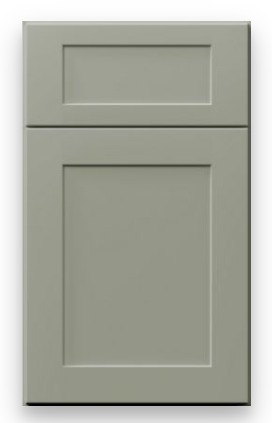
Builder Stock Cabinet's Shaker White vanity cabinets and Shaker Gray options are both built with plywood box construction and priced to compete with big-box alternatives without the quality trade-offs. If you are working with a set budget, their team can help you find the right fit before you commit to anything.
Choosing the Right Vanity Before Installation Day
A lot of homeowners order a vanity they love online and then find out it does not quite fit the space. Before you call a contractor or add anything to a cart, spend real time on the selection process. It will save you from a return shipment or a cabinet sitting in your garage for two weeks.
Size: Measure Before You Order
Start with the width of your current vanity and the clearances around it. Standard vanity widths are 24, 30, 36, 42, 48, and 60 inches. You need at least 21 inches of clear floor space in front for comfortable daily use. Doors and drawers need room to open fully without hitting the toilet or a nearby wall. If you are in a smaller bathroom, measure twice and order once.
Single vs. Double Sink
If two or more people share the bathroom, a double-sink vanity is usually worth the extra cost. In Atlanta's larger homes in Buckhead or the northern suburbs like Alpharetta and Roswell, 60-inch double vanities are common in master bathrooms. In a powder room or guest bath, a 24 or 30-inch single sink is plenty.
Cabinet Material: Why This Matters More Than Style
This is where a lot of homeowners make decisions they end up regretting. Vanity cabinets sit in one of the most moisture-prone rooms in the house. Particleboard absorbs humidity over time and starts to soften, swell, and eventually fall apart at the joints. Plywood box construction holds up significantly better in Georgia's climate. When you are comparing vanity options, always ask specifically about the box construction material, not just the door finish.
The affordable bathroom cabinet options at Builder Stock use plywood carcasses for exactly this reason.
Style Options That Work in Atlanta Homes
Shaker-style cabinets work in almost any Atlanta home, from craftsman bungalows in Decatur to suburban builds in Marietta. The clean lines and simple profile do not go out of style and they pair well with most countertop and tile choices.
Floating or wall-mounted vanities work well in smaller bathrooms because the exposed floor makes the space feel more open. They also make cleaning easier. Traditional raised-panel styles fit well in older homes in neighborhoods like Druid Hills or Inman Park. Modern flat-front styles are popular in renovated lofts and newer condos around Midtown.
Countertop Materials
Quartz is the most popular choice in Atlanta bathrooms right now. It is durable, non-porous, and requires almost no maintenance. Granite is a close second and offers more natural variation in appearance. Marble is beautiful but needs regular sealing and shows wear faster. Ceramic tile is a budget-friendly option for smaller vanities where cost is the main concern.
What the Installation Process Actually Looks Like

Here is the step-by-step sequence for a professional bathroom vanity installation in Atlanta.
Step 1: Consultation and Measurements
Before anything is ordered or a demo date is set, a good installer will come out, take precise measurements, and walk through the plan with you. This is when you confirm the vanity fits the space, identify any plumbing concerns, and clarify what materials are being used. It prevents surprises on installation day.
Step 2: Removal of the Old Vanity
The installer shuts off the water supply, disconnects the plumbing, and removes the existing vanity and countertop. Surrounding tile, walls, and flooring are protected during this step. Once the old unit is out, the wall condition and plumbing access are inspected before anything new goes in.
Step 3: Plumbing Adjustments
If the new vanity's connections do not align with the existing plumbing rough-in, a licensed plumber makes the necessary adjustments. In Atlanta's older homes, particularly those built before 1980, this step is more common than in newer construction. All plumbing changes need to meet local building codes for the project to pass inspection if permits are required.
Step 4: Installation and Leveling
Most Atlanta bathroom floors are not perfectly level. The installer positions the new vanity, shims as needed, and secures it to wall studs. Getting this right matters for long-term stability and for making sure drawers and doors operate properly after installation. Caulking is applied where the vanity meets the wall and floor to seal against moisture.
Step 5: Countertop and Sink Connection
If a new countertop is part of the project, it gets secured to the cabinet at this stage. The sink is set, the faucet is installed, and the drain hookup is completed. Supply lines are reconnected and tested before the project is considered done.
Step 6: Cleanup and Final Walkthrough
The work area is cleaned, the old vanity is removed and disposed of, and you walk through the finished installation with the contractor. This is the time to flag anything that does not look right before the team leaves the job site.
Most standard single-sink installations take three to six hours. Double vanity projects with plumbing adjustments can run a full day or longer.
Atlanta-Specific Considerations You Should Know
A few local factors matter when you are planning bathroom vanity installation in Atlanta. These are not things a generic guide will tell you, but they come up regularly in Georgia homes.
Humidity and Cabinet Construction
Georgia summers are consistently hot and humid. Inside a bathroom, that humidity is even more concentrated. This is the main reason vanity cabinet material matters so much here. Particleboard degrades faster in humid environments than it does in drier climates. Plywood and solid wood hold up far better. If you are buying new cabinets as part of this project, the box construction material should be one of the first questions you ask. The US EPA's guidance on moisture and mold control explains why managing humidity in bathrooms matters for long-term durability.
Older Plumbing in Pre-1980 Homes
Many Atlanta homes built before 1980 have galvanized steel pipes that have been corroding for decades. When a plumber opens things up to work on a vanity replacement, they sometimes find corroded pipes that need to be addressed right away. This is not a bad thing to discover. Catching a corroded supply line during a planned renovation is far better than finding it during a water emergency. Budget for the possibility, especially if your home is older.
Slab Construction in the Suburbs
A lot of newer builds in Alpharetta, Marietta, Roswell, and Kennesaw are on slab foundations. Moving plumbing in a slab home requires breaking through concrete, which is expensive and disruptive. This is why keeping the new vanity in roughly the same footprint as the existing one is especially important in slab homes. If you want to move the vanity to a completely different location in the bathroom, get a plumber's assessment before you commit to a plan.
Permit Requirements
A cosmetic vanity swap with no plumbing or electrical changes typically does not require a permit in most Atlanta metro jurisdictions. But requirements vary by county. Cobb County, Fulton County, Gwinnett County, and DeKalb County all have their own rules. If you are moving plumbing, adding new electrical, or making structural changes, check with the relevant authority before work begins. Georgia's statewide building code standards are published by the Georgia Department of Community Affairs. Installing without a required permit can create problems when you sell the home.
Should You DIY or Hire a Professional?
This one depends on the scope of what you are doing and your skill level.
A true like-for-like replacement, same size, same plumbing location, no countertop change, is manageable for a homeowner who has done basic plumbing work before. You disconnect two supply lines and a drain, pull out the old cabinet, and reverse the process with the new one. If you have the right tools and the time, it is doable.
Where DIY gets difficult: any plumbing relocation, tile repair around the old vanity footprint, new electrical runs for lighting or outlets, and countertop installations that require precise cuts. These are not impossible, but mistakes are expensive to fix. Water damage inside walls in Atlanta is not cheap to remediate.
For most homeowners, hiring a professional is the right call. The labor cost is reasonable relative to the cost of a water leak that goes unnoticed for weeks. A plumber charge of $45 to $200 per hour for a few hours is far less than a mold remediation bill.
If you are a contractor or property investor managing multiple renovations in the Atlanta area, Builder Stock Cabinet's team can assist with bulk cabinet pricing and faster lead times than most big-box alternatives.
How to Make Your Vanity Last
Once the installation is done, a few habits keep the new vanity in good shape for years.
If you chose a marble or granite countertop, it needs sealing. Check the manufacturer's recommendation for how often. Quartz is non-porous and does not require sealing.
Check under the sink once a year. A slow drip that goes unnoticed can damage the cabinet floor and the subfloor beneath it over months. Five minutes of inspection a year prevents a much bigger problem.
If the caulk seal where the vanity meets the wall or floor cracks or pulls away, recaulk it. It takes twenty minutes and keeps water out of places it should not be.
Soft-close drawer slides and hinges reduce wear on the cabinet box over years of daily use. If your vanity does not come with them, they can often be added as an upgrade during installation.
FAQs About Bathroom Vanity Installation in Atlanta
How long does bathroom vanity installation take in Atlanta?
Most standard single-sink installations take three to six hours. A double vanity with plumbing adjustments can take a full day or longer if permits and inspections are part of the process.
Do I need a permit for bathroom vanity installation in Atlanta?
A cosmetic swap with no plumbing relocation or electrical changes typically does not require a permit. If you are moving plumbing or adding new electrical, check with your local county permitting office first. Requirements vary between Cobb, Fulton, DeKalb, and Gwinnett counties.
What is the most common mistake homeowners make during vanity installation?
Ordering before measuring. The vanity arrives and it does not fit the space, or the plumbing does not line up. Always measure the existing vanity width, door and drawer clearances, and the plumbing rough-in location before purchasing.
Can I keep my existing countertop when replacing the vanity cabinet?
Yes, if the countertop is in good condition and the dimensions work with the new cabinet. However, many prefab vanities come with the countertop and sink already integrated as one unit, so in those cases the countertop comes with it either way.
What type of vanity cabinet holds up best in Atlanta's humidity?
Plywood box construction with a quality finish. Particleboard absorbs moisture in Georgia's climate and eventually degrades at the joints and shelves. Always ask about the box material, not just the door style, when comparing options. Builder Stock Cabinet's FAQ page has more on what to look for in cabinet construction.
How do I choose the right vanity size for my bathroom?
Measure the current vanity width and check clearances on all sides. You need at least 21 inches of floor space in front and enough room for all doors and drawers to open fully. Standard widths are 24, 30, 36, 42, 48, and 60 inches. When in doubt, go with the same size as what you are replacing and focus the upgrade on style and material quality.
Ready to Get Started with Builder Stock Cabinet?
If you are ready to move forward with bathroom vanity installation in Atlanta, the cabinet selection is where the project actually starts. Getting that right makes everything else easier.
Builder Stock Cabinet, located at 1707 Stoneridge Dr, Suite B, Stone Mountain, GA 30083, carries vanity cabinet options built for Atlanta's climate and designed to fit most budgets. Their showroom is open Monday through Saturday from 8:00 AM to 6:00 PM.
Whether you are replacing a single guest bath vanity or outfitting multiple bathrooms in a renovation project, their team can help you find the right fit before you commit. They offer a free AI design tool and can schedule a consultation to walk through your options.
Request a free quote from Builder Stock Cabinet and get your bathroom vanity project started the right way.
External Resources
- National Kitchen and Bath Association (NKBA) - industry standards for bathroom planning and design.
- EPA Indoor Air Quality: Mold - guidance on moisture management in bathrooms.
- Georgia Department of Community Affairs - state minimum standard building codes.