






THE REAL COST OF KITCHEN CABINETS IN ATLANTA:
Atlanta's kitchen remodeling market runs a wide range. You can spend $4,000 on a full cabinet refresh with RTA cabinets and smart installation planning. You can also spend $60,000 on a custom cabinet built with a local cabinetmaker. Both happen regularly in this city.
Most Atlanta homeowners fall somewhere in the middle — looking for something that looks genuinely good, functions reliably, and doesn't require refinancing the house to afford. That middle range, roughly $8,000 to $18,000 for an average kitchen, is exactly where decisions about where to spend and where to save matter most.
This article is about making those decisions intelligently. Not about finding the cheapest possible product, but about understanding which parts of a cabinet project are worth investing in and which parts you can reasonably dial back without living to regret it.
There's a meaningful difference between saving money and being cheap. This guide is about the former.
WHERE THE MONEY ACTUALLY GOES:
When you get a kitchen cabinet quote in Atlanta, the number you see usually breaks down across a few categories:
Cabinets themselves typically represent 40 to 60 percent of the total project cost, depending on whether installation is included. This is the category with the most room to optimize — both up and down.
Installation labor usually runs $1,500 to $4,000 in Atlanta for a standard kitchen. This varies by installer, layout complexity, whether demo is included, and how many cabinets you're dealing with.
Delivery and shipping is easy to underestimate. For large cabinet orders — especially pre-assembled units — freight costs add up. This is one area where a local supplier like Builder Stock has a practical advantage over shipping from a national warehouse across the country.
Hardware can range from $2 to $30 per knob or pull depending on quality and style. In a kitchen with 30 or 40 pieces of hardware, that's a line item worth paying attention to.
Trim and accessories — crown molding, fillers, light rail molding, pull-out trash inserts, lazy Susans — add cost but also add functionality and finish. These are often where budgets expand beyond original estimates.
Knowing which of these categories you're optimizing in before you start shopping makes the process much cleaner.
WHAT YOU SHOULD NEVER CUT CORNERS ON:
Before talking about where to save, it's worth being specific about where not to.
Box construction material. Plywood vs. particleboard is the single most important quality decision in cabinet construction. Particleboard absorbs moisture, swells, and eventually fails — particularly in Atlanta's humid summers and near dishwashers and sinks. Once a particleboard cabinet box starts to fail, there's no fixing it; the whole cabinet has to go. Plywood costs more upfront and is worth every dollar. This is not the place to save.
Hinges and drawer slides. Soft-close hardware sounds like a luxury, but it actually extends cabinet life by preventing constant impact damage. Cheap hinges and slides wear out fast, squeak, sag, and eventually require replacement. Pay for quality hardware once.
Installation quality. A cabinet that's not plumb or level is a problem you'll notice every single day. Cabinets that aren't properly anchored are a safety issue. This is not a place to save by going with the cheapest installer you can find on a classified site. A good cabinet installation from an experienced Atlanta contractor is worth what it costs.
Box joinery. Dovetail drawer boxes are the standard for quality. Stapled or nailed drawer boxes work initially but don't hold up over time. Check how the drawer boxes are joined before you commit to a cabinet line.
Everything else is negotiable. These things aren't.
WHAT YOU CAN SAVE ON WITHOUT NOTICING
Now the other side of the equation.
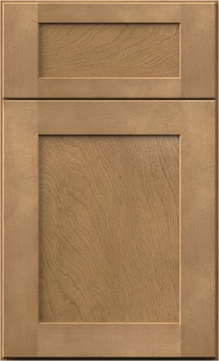
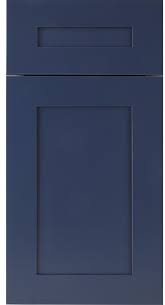
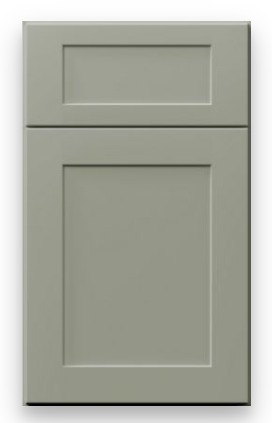
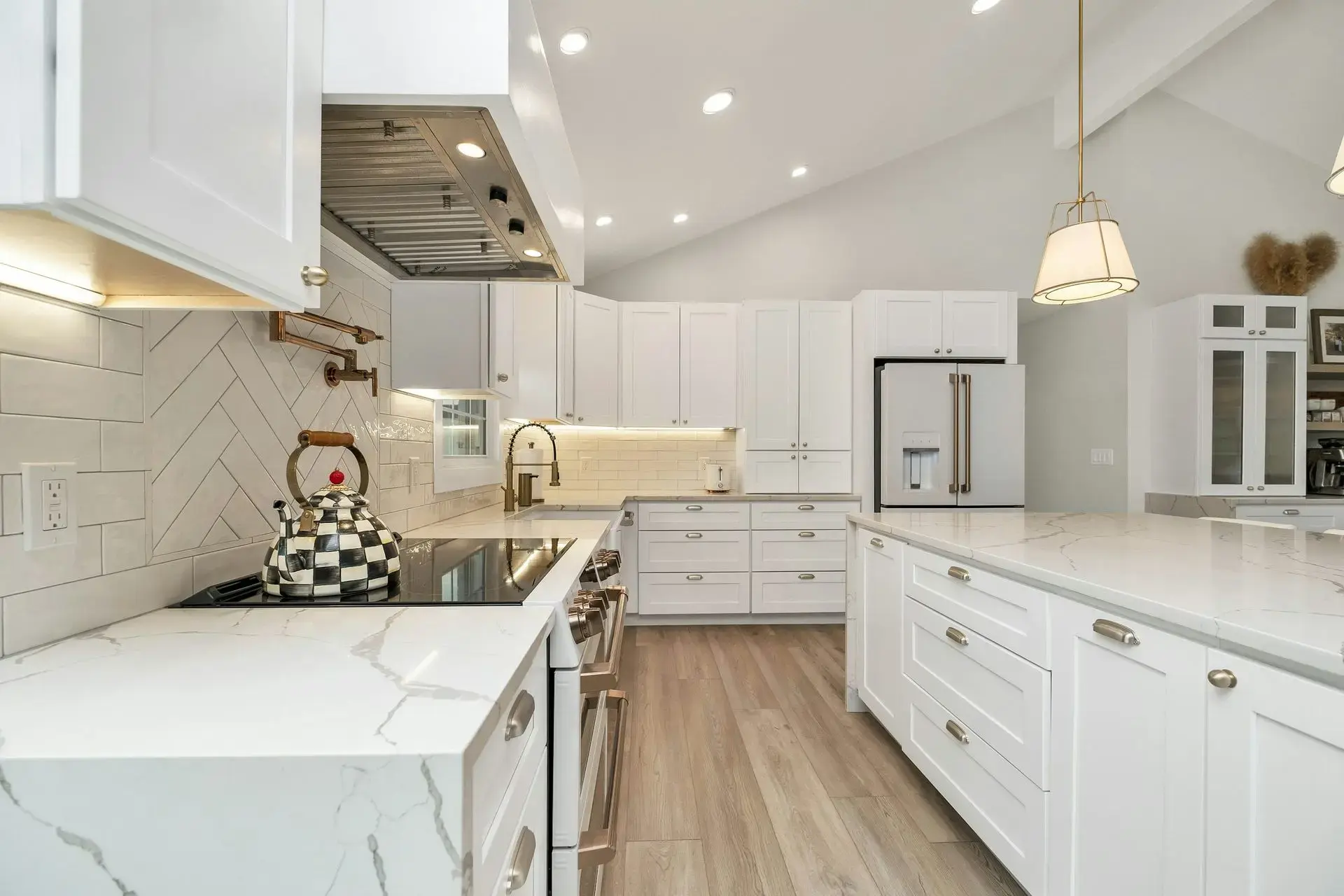
Door style. More ornate door profiles — raised panel with decorative details, cathedral arches, carved elements — add cost. A simple Shaker door costs less and, in most Atlanta homes, looks just as good or better. The most popular and aesthetically versatile cabinet door in this market happens to be one of the more affordable options.
Finish color. Painted finishes in white, off-white, and gray are well-established, consistently available, and priced fairly. Specialty finishes — unusual colors, high-gloss lacquers, complex multi-step stain processes — add cost. If you can achieve the look you want with a standard finish, you save without giving up much.
Upper cabinet depth and height. Standard upper cabinets are 12 inches deep and 30 to 36 inches tall. If your ceiling height doesn't require taller uppers, standard height is fine and costs less. The money usually goes further in lower cabinets (where you have more storage mass) than in uppers.
Interior accessories. Pull-out shelves, built-in spice racks, cabinet lighting, and lazy Susans are nice-to-haves. For a budget-conscious project, install the cabinets, use them for a few months, and then add the specific accessories you actually reach for most. You'll spend less and get more of what you actually use.
Hardware. Mid-range hardware in satin nickel or matte black is widely available in the $5 to $12 per piece range and looks perfectly good in most kitchens. You don't need $30 pulls to have a kitchen that looks finished. Buy quality where it matters — at the hinge and drawer slide level — and choose hardware that looks right without overpaying for a name.
RTA CABINETS: THE BIGGEST LEVER FOR BUDGET PROJECTS:
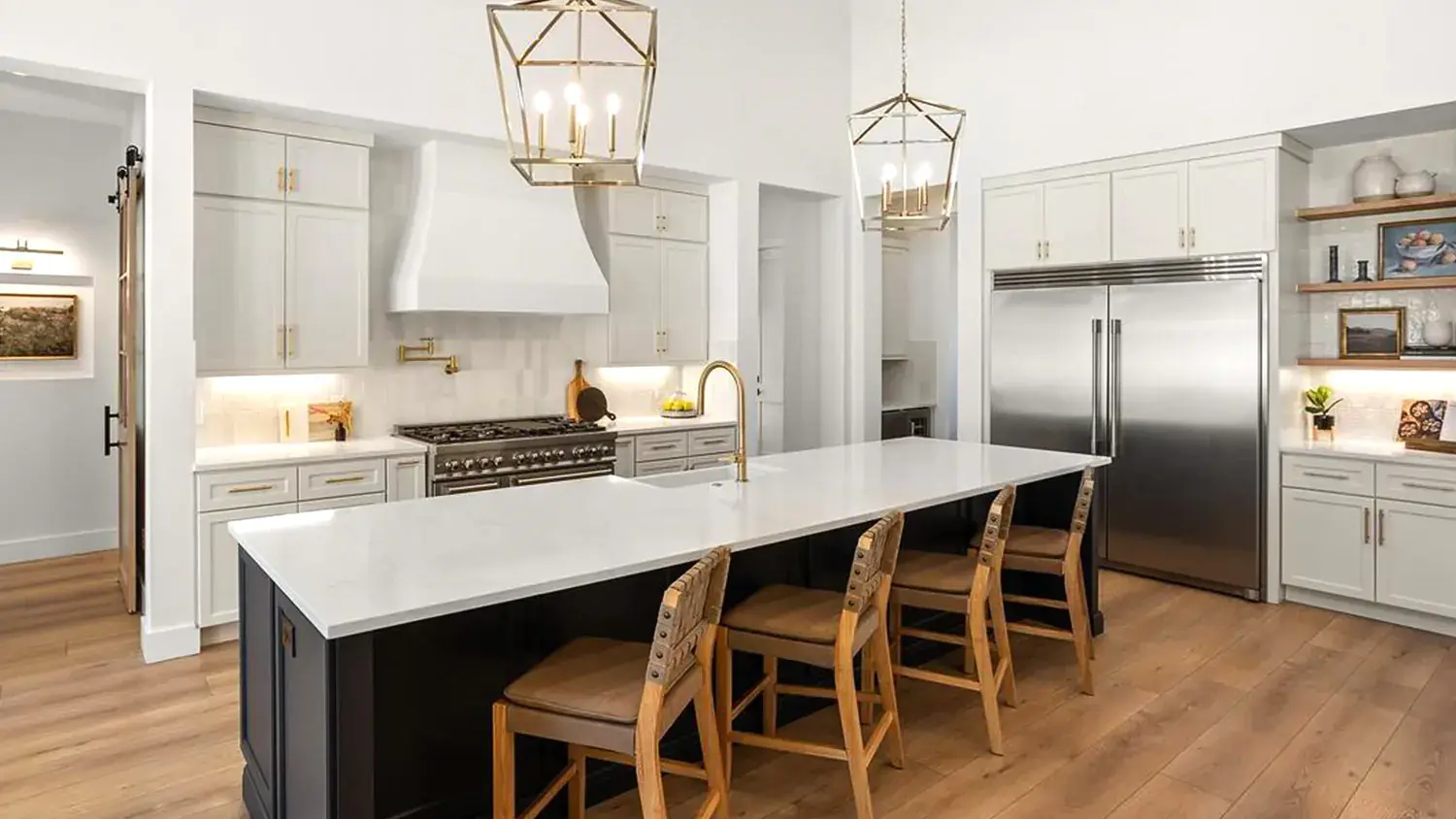
Ready-to-assemble cabinets are the most significant single lever Atlanta homeowners can pull to reduce cabinet costs without compromising material quality.
Here's why. Pre-assembled cabinets cost more to ship because they ship fully assembled — you're paying freight on a lot of air space inside the boxes. RTA cabinets ship flat-packed, which is far more efficient. That shipping savings flows through to the purchase price. On a full kitchen order, the difference can be $1,500 to $3,000 or more depending on how many cabinets you're buying.
The catch, such as it is: RTA cabinets require assembly before installation. That's extra time for you or your installer. If your contractor charges by the hour, factor in roughly 15 to 30 minutes per cabinet for assembly. Whether that labor cost erases the shipping savings depends on your project and your installer's rate.
For a homeowner doing partial DIY — or for a project where the timeline is flexible — RTA is often the right move. For a project where speed is the priority and the labor cost per hour is low, pre-assembled may be worth the price difference.
Builder Stock carries both, and their Atlanta team can help you run the math for your specific kitchen layout and contractor situation.
HOW TO GET THE MOST OUT OF BUILDER STOCK'S ATLANTA PRICING:
Working with a local Atlanta supplier has pricing advantages that aren't always obvious upfront.
No long-distance freight. When you're ordering from a warehouse in New Jersey or Texas, you're paying to ship heavy cabinet boxes across the country. Builder Stock's Atlanta location cuts that cost significantly.
Visible inventory. You can come in, see what's in stock, and potentially save by selecting from available inventory rather than waiting for a custom order. In-stock items often carry better pricing than special orders.
No surprise damage claims. Shipping damage on large cabinet orders is genuinely common with national online retailers. When you order locally and pick up or receive local delivery, the damage rate drops and the resolution process is faster and simpler if it does happen.
Volume pricing. If you're doing a full kitchen, ask about what pricing structure applies to larger orders. Suppliers who work with contractors regularly often have pricing tiers that benefit homeowners doing full kitchens too.
It's also worth asking Builder Stock about timing. Like most building materials suppliers, inventory and pricing can move. If you have flexibility on when you buy, checking for promotions or in-stock discounts can save real money.
THE CONTRACTOR MATH: WHEN TO DIY AND WHEN NOT TO:
Atlanta has a healthy population of capable DIYers, and kitchen cabinet projects do attract people who want to handle their own installation. Here's an honest look at the math.
A professional cabinet installer in Atlanta typically charges $50 to $100 per hour. A full kitchen installation — including demo of old cabinets, hanging new uppers, installing lowers, scribing to walls, and adding trim — might take 16 to 30 hours depending on complexity. That puts professional installation in the $1,500 to $3,000 range for most kitchens.
The DIY temptation is obvious: $2,000 is real money that could go toward better cabinets or a better countertop.
The problem is that cabinet installation is genuinely technical. Walls are rarely plumb. Floors are rarely perfectly level. Getting cabinets level, plumb, and properly anchored to wall studs requires patience, the right tools (a laser level is essentially mandatory), and the willingness to spend time shimming, scribing, and adjusting.
Experienced DIYers who have done it before can absolutely handle this. First-timers often spend more time than expected and occasionally make mistakes that are expensive to undo.
A middle path that works well in Atlanta: hire a professional to do the upper cabinets (which are more technically demanding and more consequential if they fail) and handle some of the finish work yourself. Or assemble the RTA cabinets yourself to save that portion of the labor, then hire an installer for the hanging and scribing work.
MISTAKES THAT COST ATLANTA HOMEOWNERS MORE IN THE END:
A few patterns that show up regularly when budget-conscious kitchen renovations go wrong:
Ordering without verified measurements. Cabinet orders are not returnable once manufactured. If your measurements are off - even by an inch in a critical spot — you're buying filler pieces, modifying cabinet runs, or in the worst case, reordering. Measure twice. Have someone else check your measurements. Then order.
Choosing the cheapest installer. The $30-per-hour installer who turned up on a classified listing may be perfectly capable. Or the cabinets may end up out of level and poorly anchored. You can't tell from an ad. Get references, look at previous work if possible, and pay a fair rate for someone with a track record.
Skipping the physical sample step. Online cabinet photos are professionally lit and color-corrected. The actual finish in your kitchen under your light conditions will look different. Before you commit to a finish color, get a physical sample and look at it in your actual kitchen at different times of day.
Underestimating the trim and filler budget. Most kitchens need filler pieces, crown molding, or light rail to look finished. These items aren't always top of mind when you're pricing cabinets, but they add up. Build them into your estimate before you finalize a budget.
Buying in a rush. Kitchen renovations always feel urgent once you've decided to do them. But placing a cabinet order under time pressure leads to mistakes — size miscalculations, finish choices you're not fully committed to, skipping price comparisons. Give yourself time to do this carefully.
FAQs:
What's the cheapest way to get new kitchen cabinets in Atlanta?
RTA cabinets from a local supplier like Builder Stock, self-assembled and installed by a competitive but qualified local contractor. This combination delivers the most cabinet quality per dollar in the Atlanta market.
How much does a kitchen cabinet project actually cost in Atlanta?
For a typical mid-size Atlanta kitchen, expect $8,000 to $18,000 all-in (cabinets plus installation, not including countertops). Budget renovations using RTA cabinets and partial DIY can come in below $8,000. High-end projects run $20,000 and beyond.
Is it worth buying kitchen cabinets online vs. locally?
It depends. National online retailers sometimes have lower sticker prices, but you're adding freight costs, accepting shipping damage risk, and giving up the ability to see the product before buying. Builder Stock's Atlanta location often closes that gap while adding local support and faster turnaround.
How can I tell if a cabinet is actually good quality?
Check the box material (plywood, not particleboard), the drawer box joinery (dovetail, not stapled), and the hinge hardware (soft-close, adjustable). Open and close everything multiple times. Quality reveals itself in the feel.
Are there times of year when cabinet pricing is better in Atlanta?
Suppliers sometimes run promotions tied to new inventory arrivals or slow periods in the construction calendar. It's worth asking Builder Stock directly about timing. There's no universally guaranteed "cheap season," but flexibility on timing occasionally pays off.
Can I reface existing cabinets instead of replacing them?
Refacing — replacing just the doors and drawer fronts while keeping the existing box — can save money if the box construction is solid. If the boxes are particleboard and showing wear, full replacement is usually the better long-term choice.
Builder Stock is an Atlanta-based cabinet supplier helping homeowners, builders, and contractors find quality kitchen cabinets at prices that make sense. Visit the Atlanta showroom to compare options in person and get pricing tailored to your project.