





Introduction- Bathroom Vanity Designs in Atlanta
Atlanta homeowners spend significant money renovating bathrooms every year, yet the vanity and cabinet decision consistently gets less planning attention than the kitchen, even though it drives just as much of the renovation's total cost and long-term visual impact.
Walk into most Atlanta home improvement conversations and you will hear detailed opinions about kitchen cabinet styles, countertop materials, and tile selections. Ask those same homeowners how they chose their bathroom vanity, and the answer is usually some version of "we just picked something that fit the space." That approach leads to vanities that warp within a few years, finishes that clash with the tile, and sizing choices that leave either too little storage or too little floor space.
This guide is written for Atlanta homeowners, contractors, and property managers who want to make a genuinely informed bathroom vanity decision in 2026. You will find practical guidance on vanity types, sizing, construction quality, finish selection, current design trends across Atlanta's diverse home styles, and realistic local pricing, so that by the time you reach out to a supplier, you already know exactly what you need.
Why Your Bathroom Vanity Decision Deserves More Planning Than Most Atlanta Buyers Give It:
The bathroom vanity is not just a storage unit. It anchors the entire visual composition of the bathroom, from the countertop height to the mirror placement to the way light interacts with the space. A well-chosen vanity makes a bathroom feel intentional and finished. A poorly chosen one makes even a brand new bathroom renovation feel off, in ways that are hard to name but immediately noticeable.
In Atlanta's real estate market, bathrooms are one of the first spaces buyers evaluate during a home tour. A dated or mismatched vanity signals that the rest of the home may have similar oversights, and that perception directly affects both buyer interest and offer price. Conversely, a clean, well-proportioned bathroom vanity in a neutral finish that suits the home's architecture signals attention to detail that buyers respond to positively.
Beyond aesthetics, Atlanta's climate adds a practical dimension to the vanity decision that buyers in drier climates do not face to the same degree. Bathrooms in Atlanta homes experience consistent humidity cycling through summer months, and that moisture exposure is unforgiving to low-quality cabinet construction. The materials and construction method you choose for a bathroom vanity matter more here than in many other markets.
The Four Main Bathroom Vanity Types Available in Atlanta
Understanding the structural type of vanity before discussing style or finish saves you from choosing something that looks right in a showroom but does not function correctly in your specific bathroom layout.
Freestanding Vanity Cabinets: Traditional Look, Maximum Storage
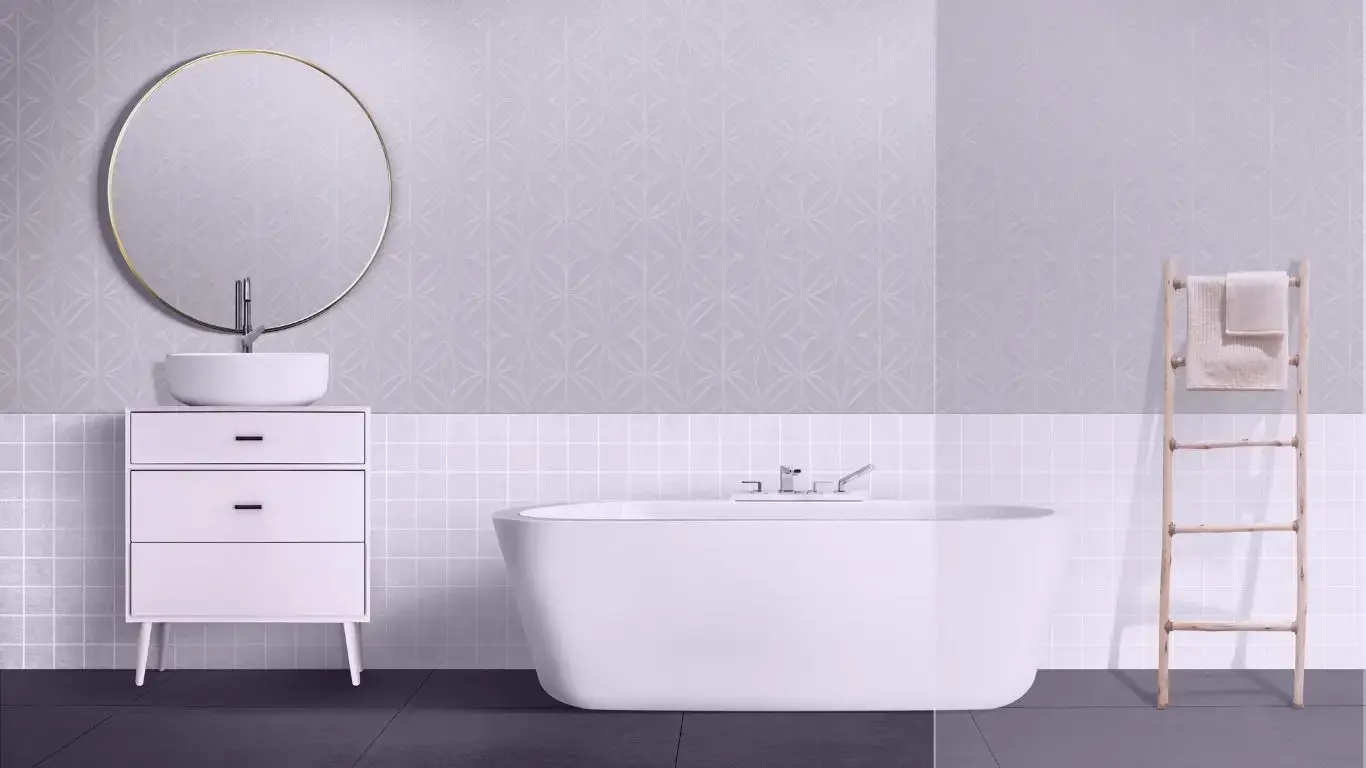
A freestanding vanity sits directly on the bathroom floor and extends from that base to the countertop height, typically 32 to 36 inches. The full cabinet height from floor to top is usable storage space, which makes freestanding vanities the most practical choice for bathrooms where storage is a priority.
Freestanding designs suit Atlanta's traditional and transitional home styles particularly well. Ranch homes, craftsman bungalows, and colonial-style properties in neighborhoods like Decatur, Druid Hills, and Smyrna often have bathrooms where a freestanding shaker-style vanity in white or gray fits the architecture naturally. The visual weight of a freestanding cabinet also grounds the space, which works well in larger bathrooms where a floating design might look visually underwhelming.
One consideration specific to Atlanta renovations is floor condition. If your bathroom floor has any slope or irregularity from the original construction, a freestanding vanity may require shimming to sit level. This is a straightforward fix during installation but worth knowing before you begin.
Floating or Wall-Mounted Vanity: The Modern Choice for Atlanta Bathrooms
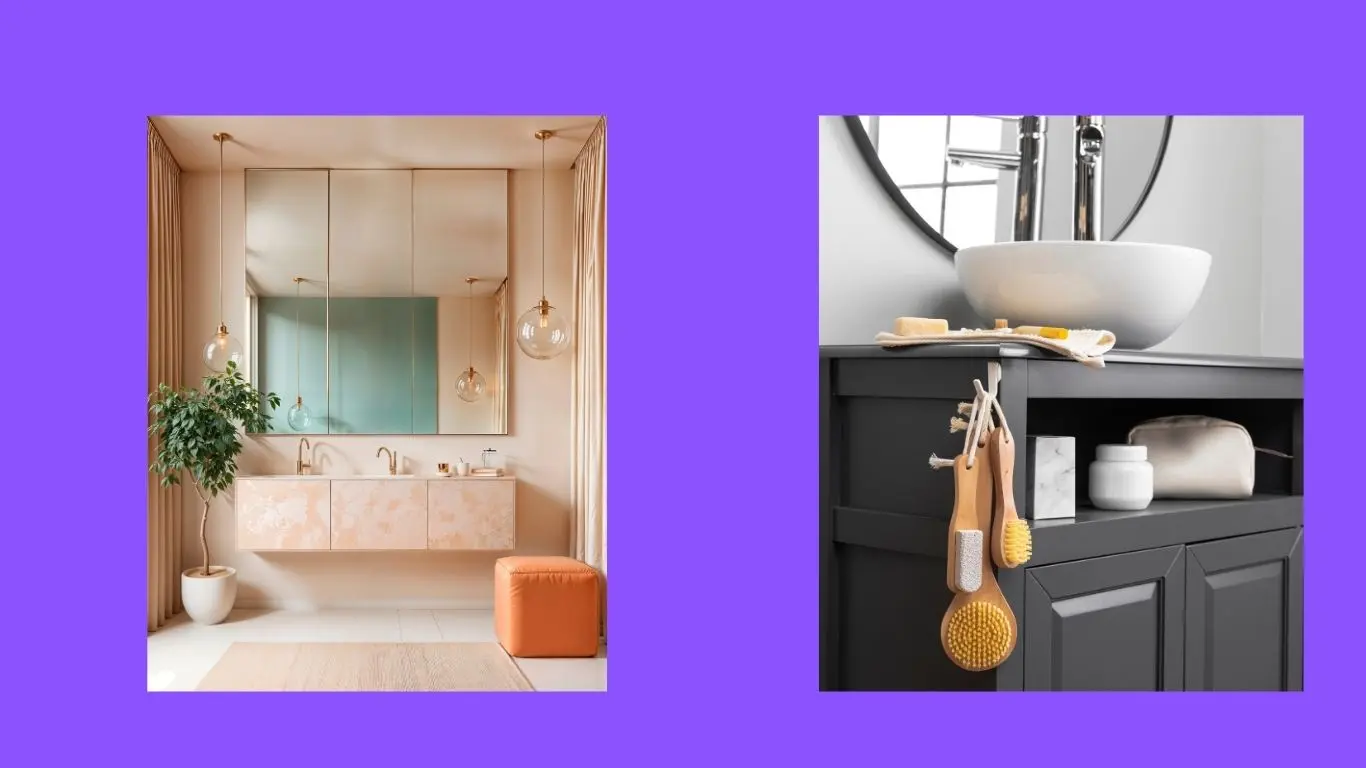
A floating vanity is anchored directly to the wall studs, with the cabinet body suspended above the floor, typically leaving 6 to 18 inches of floor clearance beneath. That open floor space makes bathrooms feel larger than their actual square footage, which is one reason floating vanities have become the most requested style in Atlanta's condo, townhome, and new-construction markets.
The floor-to-ceiling visual line created by a floating vanity makes the bathroom appear taller. Cleaning the floor underneath is considerably easier than working around the base of a freestanding unit. The contemporary, minimal aesthetic also suits Atlanta's growing stock of modern and transitional construction, particularly in Midtown, Brookhaven, and newer developments across Alpharetta and Peachtree City.
The critical installation requirement for floating vanities is proper wall reinforcement. The wall framing must be capable of supporting the combined weight of the cabinet, the countertop, the sink, and the plumbing fixtures, which can be substantial depending on the countertop material. If your bathroom wall does not have adequate blocking between studs, a carpenter or general contractor will need to add it before installation. This adds cost but is non-negotiable for a safe, stable installation.
Single Sink Vanity: The Practical Option for Guest and Ensuite Bathrooms
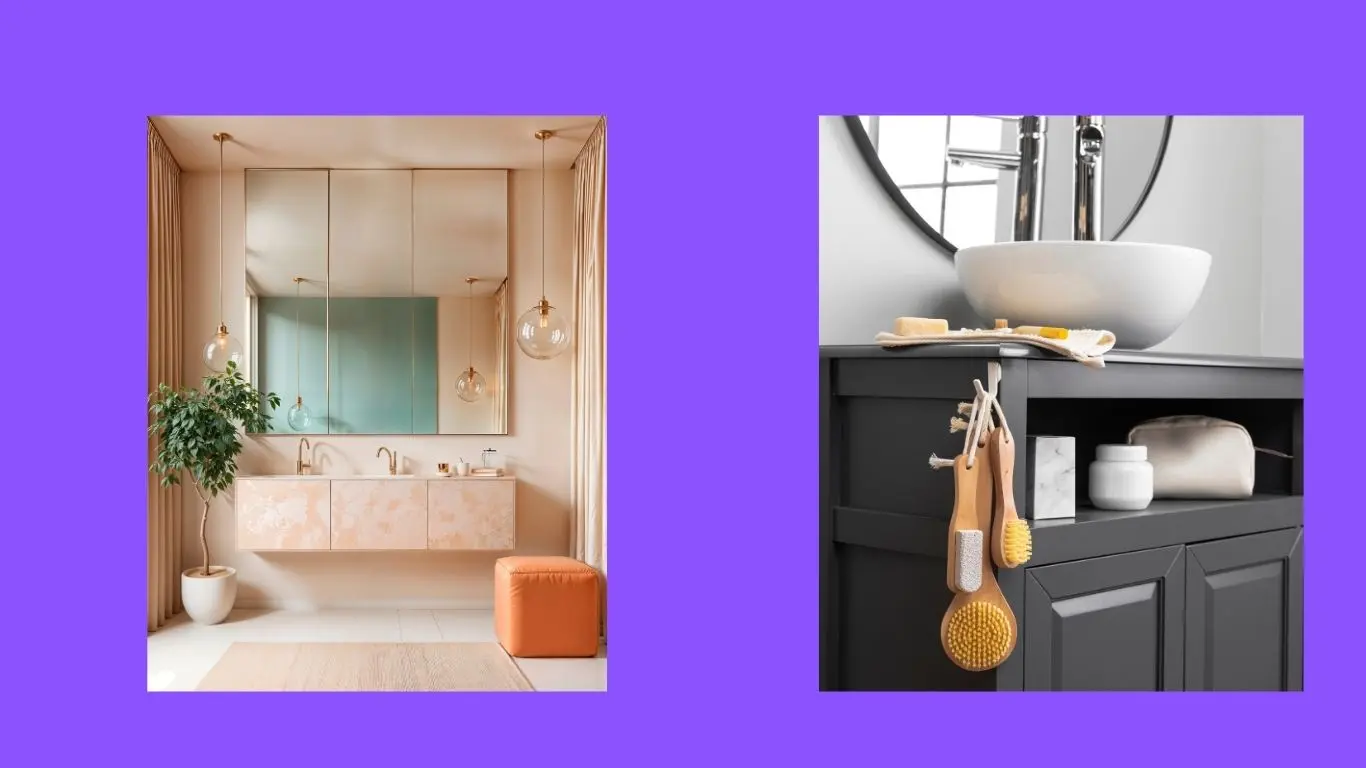
A single sink vanity concentrates all plumbing at one point and dedicates the remaining counter space to storage and workspace. For guest bathrooms, powder rooms, and single-occupancy ensuites, a single vanity in the right width provides everything the space needs without overcrowding a smaller footprint.
Standard single vanity widths range from 24 inches for compact spaces to 48 inches for bathrooms with more generous wall runs. The 36-inch single vanity is the most commonly purchased size in Atlanta because it fits the majority of standard bathroom layouts comfortably, provides adequate counter space for daily use, and leaves room for a door to open without obstruction.
Double Sink Vanity: The Right Choice for Master Bathrooms and Shared Spaces
A double sink vanity places two sinks along a continuous countertop, typically starting at 60 inches wide and extending to 72 inches or beyond for larger master bathrooms. The practical advantage is obvious for couples or families sharing a primary bathroom. Each person has dedicated counter space, a separate mirror zone, and personal storage in the cabinets below.
In Atlanta's master bathroom market, the double vanity has become a near-standard expectation for homes in the $450,000 and above price range. Buyers evaluating master bathrooms without double vanities frequently note the absence, and it can affect perceived value during a home sale. If your master bathroom has sufficient wall space, upgrading to a double vanity during a renovation is one of the higher-return investments you can make.
Bathroom Vanity Styles and Finishes That Work in Atlanta Homes
Once you have identified the right vanity type for your bathroom, the style and finish decision follows naturally from your home's overall design character and the practical demands of the space.
Shaker-Style Bathroom Vanities: The Dominant Choice in Atlanta
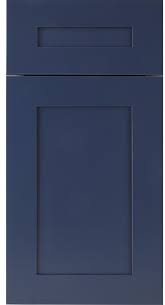
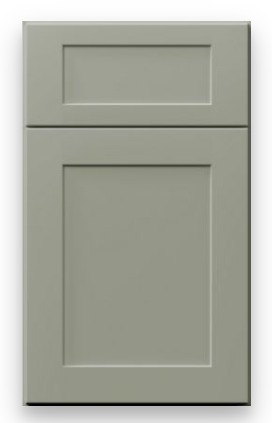
Shaker bathroom vanities use the same five-piece door construction as shaker kitchen cabinets: a flat center panel surrounded by a square-edged frame with clean, simple joinery. That design simplicity is exactly why shaker suits such a wide range of Atlanta home styles, from the craftsman bungalows of Inman Park to the newer construction in Cumming and Roswell.
The shaker profile reads as traditional without being ornate and as modern without being cold. It is the design equivalent of a neutral backdrop that lets other elements of the bathroom, such as the tile, the hardware, or the light fixture, do the visual work. For buyers who want a bathroom that will still look current a decade from now, shaker is the safest and most consistently satisfying choice.
White Bathroom Vanity Designs: Timeless and Resale-Friendly
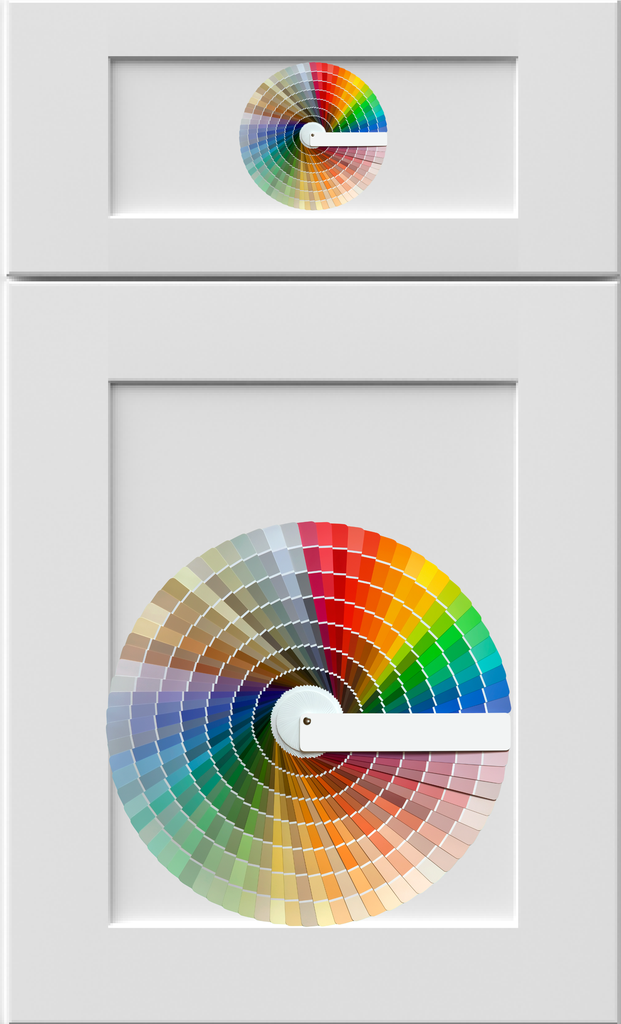
White is the most purchased vanity finish in Atlanta for the same reasons it dominates the kitchen cabinet market: it reflects light, makes spaces feel larger and cleaner, and appeals to the broadest range of buyers during a home sale. A white shaker vanity paired with a simple chrome or brushed nickel faucet and light-toned tile reads as both classic and contemporary, a combination that works as well for a primary bathroom as it does for a renovated guest bath.
White finishes do require one practical consideration in a bathroom setting: finish durability. The humidity and steam generated by daily showers accelerates finish wear on lower-quality painted surfaces. When choosing a white vanity, confirm that the paint finish is a catalyzed lacquer or conversion varnish rather than a standard air-dry paint. Catalyzed finishes cure harder and resist yellowing, chipping, and moisture absorption significantly better than standard painted finishes.
Gray Bathroom Vanity Designs: Modern Appeal with Practical Advantages
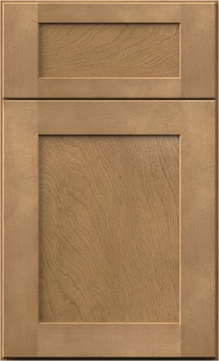
Gray vanities have grown steadily in Atlanta bathroom renovations over the past four years, and the trend continues in 2026. A medium or soft gray finish in shaker construction pairs well with white subway tile, marble-look porcelain, and most natural stone countertop options. Gray also hides minor surface wear more forgivingly than white, which makes it a practical choice for high-traffic family bathrooms.
The range of gray finishes available has expanded considerably. Warm gray tones with subtle beige undertones, often called greige, feel softer and more residential. Cool blue-gray finishes read as sharper and more contemporary. Before committing to a gray vanity finish, review a physical sample under your bathroom's actual lighting conditions, as gray shades shift noticeably depending on light source color temperature.
Flat-Front Slab Vanity Cabinets: The Minimalist Option
Flat-front slab vanity doors have no frame or recess, creating a smooth, unbroken door surface. The look is resolutely modern and suits the contemporary condo and townhome market in Atlanta's urban core. In high-gloss white or a sophisticated matte finish, slab vanities can deliver a strong design statement in a small bathroom without overwhelming the space.
The practical limitation of slab vanity doors is that lower-quality substrate materials show environmental stress more visibly than shaker profiles. Small warps or swells in a flat surface are immediately apparent in a way they are not on a framed door. For bathroom environments, slab vanity doors should be specified in moisture-resistant MDF or solid wood with a high-quality factory finish rather than a standard painted surface.
Bathroom Vanity Sizing: What Atlanta Buyers Must Know Before Ordering
Ordering the wrong vanity size is one of the most common and most avoidable renovation mistakes. Before you look at styles or finishes, get your measurements right.
| Vanity Width | Sink Configuration | Recommended Bathroom Size | Best Use |
| 24 to 30 inches | Single sink | Small bathroom or powder room | Guest bath, powder room |
| 36 inches | Single sink | Standard bathroom | Ensuite, secondary bath |
| 42 to 48 inches | Single sink | Medium bathroom | Primary bath for one person |
| 60 inches | Double sink | Large bathroom | Shared ensuite or master bath |
| 72 inches and above | Double sink | Spacious master bathroom | Primary bath, luxury renovation |
Standard vanity height runs at 32 to 34 inches from floor to countertop. Comfort height vanities, also called ADA-compatible height, sit at 36 inches, which suits taller adults and reduces back strain during daily use. If the primary users of the bathroom are adults over 5 feet 8 inches, comfort height is worth specifying from the beginning.
Depth is the measurement most buyers overlook. Standard vanity depth runs 18 to 21 inches from wall to the front face of the cabinet. In a narrow bathroom where the door swings inward, a deep vanity can restrict traffic flow or prevent the door from opening fully. Measure the clearance between your vanity wall and the door swing arc before confirming your depth selection.
Before you order, take three measurements: the available wall width, the door swing clearance, and the rough-in distance of your existing plumbing from the wall. Confirming these numbers with your supplier or contractor prevents the most common ordering errors.
Construction Quality: What Separates a Durable Vanity from a Disposable One
Bathroom vanities in Atlanta's climate face specific construction demands that buyers in drier regions do not encounter to the same degree. Atlanta's summer humidity levels are consistent and significant, and that moisture environment is unforgiving to low-quality materials.
Plywood Box Construction: Non-Negotiable in Bathrooms
The cabinet box, meaning the carcass that holds the doors, drawers, and shelves, should be built from plywood rather than particleboard. This is important in kitchens; it is essential in bathrooms.
Particleboard absorbs moisture through its paper-based binder and wood fiber composition. In a bathroom that sees daily shower steam and occasional water splashes near the sink, particleboard box construction will swell at the joints, cause drawer slides to bind, and eventually fail structurally within a few years. Plywood construction resists moisture absorption, holds screws through thousands of cycles of hardware use, and maintains its dimensional stability in Atlanta's humid summers far more reliably.
When shopping for a bathroom vanity in Atlanta, asking whether the box is plywood or particleboard is the single most important quality question you can ask. A supplier who cannot answer that question immediately is a signal to shop elsewhere.
Soft-Close Hardware as a Standard Feature
Soft-close hinges and drawer slides are the current standard for quality bathroom vanity construction. They prevent the slamming that loosens hinge screws over time, protect the finish at the door edges from impact wear, and simply make the bathroom experience noticeably quieter and more refined.
Concealed, six-way adjustable hinges allow minor door alignment corrections after installation without removing the door entirely. This matters in bathroom environments where seasonal humidity causes slight dimensional shifts in the cabinet and door materials. Adjustable hinges absorb those shifts without leaving gaps between doors.
Finish Durability in High-Humidity Environments
As noted in the style section, the quality of the paint finish on a bathroom vanity matters more than the color. Catalyzed lacquer finishes cure to a harder surface than standard air-dry paints and resist yellowing, moisture penetration, and surface chipping through years of daily bathroom use. Ask for this specification when reviewing any painted vanity option, whether white, gray, or any other finish.
Bathroom Vanity Design Ideas for Popular Atlanta Home Styles
Modern Farmhouse Bathrooms
Atlanta's modern farmhouse renovation trend shows no sign of slowing in 2026. The bathroom vanity in a modern farmhouse setting works best as a white shaker freestanding cabinet with simple matte black hardware, a white quartz or marble countertop, and an apron-front or vessel sink. The contrast between the matte black hardware and the white shaker cabinet is the defining visual element of this style and pairs naturally with wood-tone accents in mirrors, shelving, or flooring.
Traditional and Colonial-Style Atlanta Homes
Traditional Atlanta homes in established neighborhoods like Virginia-Highland, Grant Park, and Brookhaven often have bathrooms where the architecture calls for a more substantial vanity presence. A freestanding vanity in white or cream with raised panel doors, brushed nickel hardware, and a marble or quartz countertop with a traditional ogee edge profile suits these spaces well. The raised panel door adds visual weight that balances the proportions of larger, higher-ceilinged bathrooms common in these home styles.
Contemporary Atlanta Condos and Townhomes
Atlanta's Midtown, Old Fourth Ward, and newer Buckhead condo inventory skews toward contemporary interiors where clean lines and minimal ornamentation are the design standard. A floating wall-mounted vanity in a matte white or concrete-gray finish with integrated pulls or touch-latch doors is the appropriate choice for these spaces. Pairing a floating vanity with a matching frameless mirror and a wall-mounted faucet creates the fully cohesive contemporary bathroom look that buyers in this market consistently prefer.
How Much Does a Bathroom Vanity Cost in Atlanta? (2026 Pricing Guide)
The following pricing reflects materials only. Installation costs are addressed separately below.
| Vanity Type | Size Range | Materials Cost | Lead Time |
| In-stock single freestanding (white or gray shaker) | 24 to 48 inches | $400 to $1,200 | Same week |
| In-stock double freestanding (white or gray shaker) | 60 to 72 inches | $900 to $2,200 | Same week |
| In-stock floating or wall-mounted | 24 to 48 inches | $600 to $1,800 | Same week |
| Semi-custom single vanity | Any width | $1,500 to $4,000 | 4 to 8 weeks |
| Semi-custom double vanity | 60 inches and above | $3,000 to $7,000 | 4 to 8 weeks |
| Full custom vanity | Any specification | $5,000 to $15,000+ | 8 to 14 weeks |
Installation costs for bathroom vanities in Atlanta typically run between $200 and $800 per vanity, depending on whether you are doing a like-for-like replacement or making plumbing adjustments. A floating vanity requiring wall blocking and new rough-in work sits at the higher end of that range. Countertop fabrication and installation, if not included with the vanity, adds $400 to $1,200 depending on material and size.
Hardware costs are a separate line item. A complete set of knobs or pulls for a standard vanity runs $50 to $300 depending on the style and brand. Premium hardware from European manufacturers costs more but often includes better dimensional tolerances and longer warranty coverage.
For Atlanta buyers focused on resale value, the highest-return vanity investment is a quality in-stock white or gray shaker freestanding or floating vanity in the right size for the bathroom. The combination of in-stock availability, plywood construction, and a neutral finish consistently delivers the best balance of upfront cost and long-term value.
Where to Buy Bathroom Vanity Cabinets in Atlanta, GA
Why Buying In-Stock Locally Is Smarter Than Ordering Online
Buying a bathroom vanity online from a national retailer introduces risk that most buyers do not fully consider until something goes wrong. Finish colors look different on screen than they do in person under real bathroom lighting. Dimensions that appear clear in a product listing can carry tolerances that cause fit problems on site. Shipping damage is common with cabinet-format furniture, and returning a damaged vanity from Atlanta to a national distribution center is time-consuming and often disputed.
Buying from a local Atlanta warehouse solves all of these problems. You inspect the finish color against your tile sample before purchasing. You confirm the dimensional specifications with a team member who knows the product. You take delivery within days, not weeks, and if there is any issue with the order, resolution is a conversation with a local team rather than a customer service queue.
Builder Stock Cabinet: Quality Kitchen and Bathroom Cabinets for Atlanta
Builder Stock Cabinet carries quality bathroom vanity cabinets alongside its full kitchen cabinet range, serving Atlanta homeowners, interior designers, general contractors, and property developers across the metro area. Buying your kitchen and bathroom cabinets from a single local supplier simplifies the ordering process, ensures finish consistency across both rooms, and typically provides better pricing on combined orders than sourcing from separate vendors.
The team serves buyers throughout Buckhead, Sandy Springs, Marietta, Alpharetta, and surrounding communities across Georgia. Whether you are refreshing a single guest bathroom or outfitting multiple units in a development, Builder Stock Cabinet has the inventory and the local knowledge to help your project move forward without delays.
Browse the full vanity and cabinet collection or request a free Atlanta bathroom vanity quote to get your project started with a real number and a real timeline.
Conclusion
Choosing the right bathroom vanity design for your Atlanta home in 2026 comes down to four decisions made in the right order: the structural type that suits your bathroom layout, the sizing that fits your wall space and daily use requirements, the finish and style that match your home's architecture, and the construction quality that will hold up in Atlanta's humid climate.
White and gray shaker vanities in plywood construction remain the most practical, most versatile, and most resale-conscious choice for the majority of Atlanta bathrooms. Whether you need a compact single vanity for a guest bath in Marietta or a 72-inch double vanity for a master bathroom renovation in Sandy Springs, buying from a local Atlanta warehouse with real in-stock inventory gives you the fastest path from decision to installation.
Contact Builder Stock Cabinet today for a free bathroom vanity quote, or browse the collection to see what is currently available for same-week pickup across metro Atlanta.